Economics and Profitability
Container Vertical Farms: Location Makes or Breaks Profit
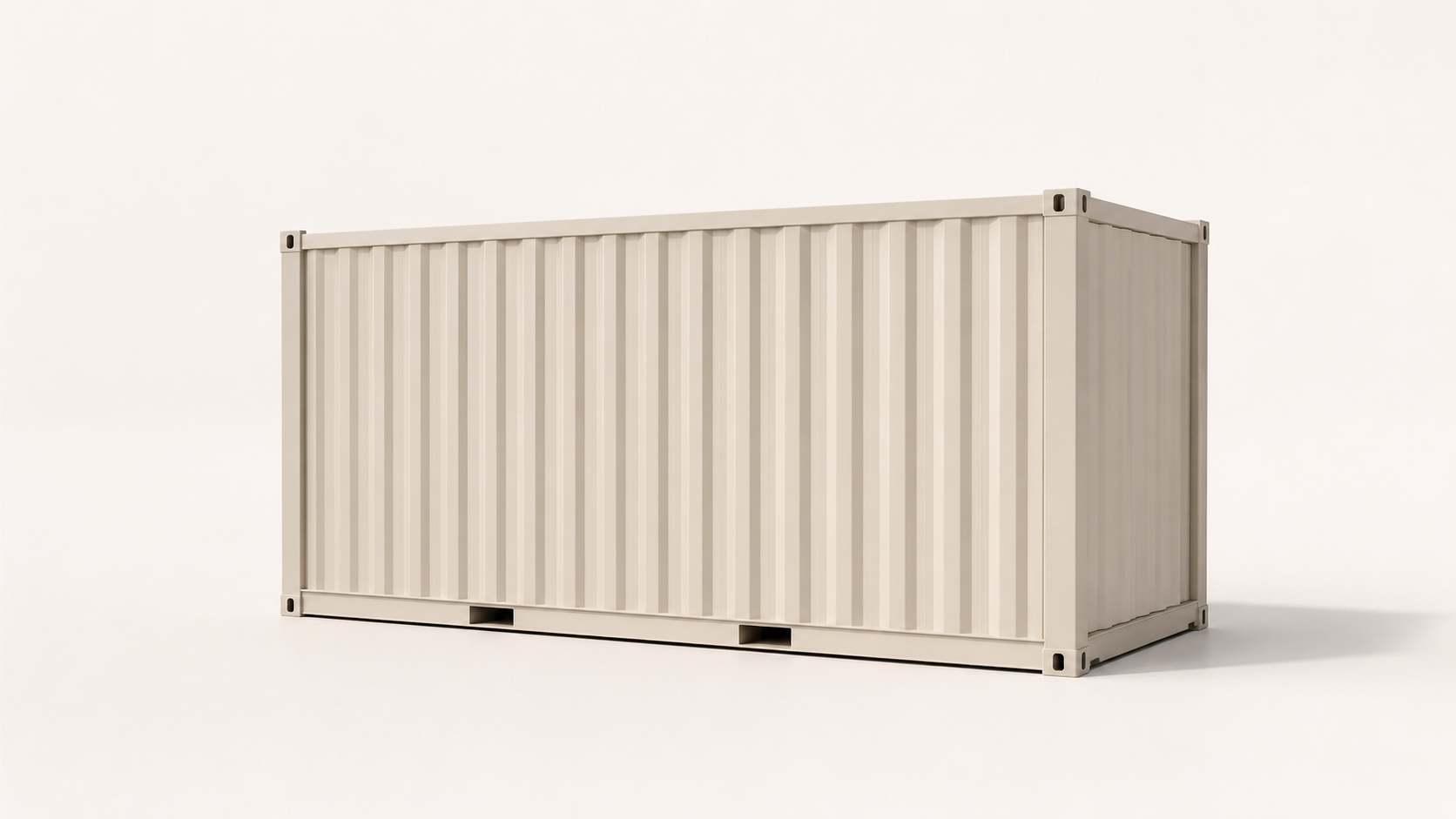
The reasons people are drawn to container farms tend to line up. Keep the upfront investment low, scatter your sites around, and walk away if it doesn’t work. That one thing — “you can move it” — seems to lower the bar to entry across the board.
What’s easy to miss here is the fact that the only thing you can move is the box. The electricity bill, the buyers nearby, the going rate for how much they’ll pay for those greens — none of it moves with the box. Set two identical boxes down and one runs in the black while the other runs in the red — and that gap is driven far more by the conditions of where it’s placed than by the equipment inside the box.
“You can put it anywhere” does not necessarily mean “you’ll get the same result anywhere.” If anything, the wider the range of places you can put it, the more that where you set it down drives the economics.
The economics turn on where you place it, not on how the box performs
A container farm is a farm with shelving, lighting, and HVAC built into a shipping container. You can put it anywhere, start small, and relocate it if it comes to that — that’s usually how it’s pitched. When you hear “you can put it anywhere,” your eye naturally goes to the mobility. But the electricity bill is completely different depending on where you put it. The same box placed under a city’s high power rates versus placed somewhere cheap out in the regions gives you different results.
Let me draw one line first. The axes I’m about to list are not a way to make a container farm work. They’re the bare-minimum cutoff lines you can’t drop if you’re going to try it anyway. Even with a good site, the structural disadvantage of a container farm — that building the same growing area as a single fixed unit costs less per unit area — does not go away. Read this on the premise that mobility comes with a price tag. This is where you should stop, just short of where the vendor’s sales deck tells you “it works as long as you pick the right site.”
Worrying about power rates isn’t overthinking it — it’s the first axis you go after when you size up a site. For leafy greens, electricity can take up a sizable share of the cost, and a slight difference in power rates adds up over a year. Run the same box, the same growing recipe, the same people, and if the power rate shifts by twenty or thirty percent between regions, equipment that runs around the clock ends up with a difference in annual cost you can’t ignore. The electricity bill alone doesn’t decide black versus red, but of all the costs that vary by site, electricity is the one that bites hardest. “You can put it anywhere,” flipped around, also means “wherever you put it, the difference is yours to carry.” The real nature of that mobility is that the operator carries, on their own back, the single condition that moves the most: the site.
I’d like to call electricity the “cost line that bites hardest,” but let me restate that precisely. The single largest cost line is actually labor. In Japan’s fact-finding survey of large-scale protected cultivation and vertical farms (fiscal 2025 data), labor accounted for roughly 32 to 36 percent of cost regardless of growing format, and it was the largest line. For a PFAL, electricity is about a fifth of cost (24%), of which lighting alone is the majority at 58% (see 9). Electricity isn’t the heart of the matter. Electricity is the cost line that moves the most with the site. Labor doesn’t shift by orders of magnitude across regions, but electricity bites on a yearly scale through a region’s power rate. That’s why, when you talk about site, you look at electricity first.
That power weighs this heavily in the site decision is itself borne out by the research. In vertical farms, container farms included, lighting and HVAC make up the bulk of energy consumption, and this is the main driver behind the high operating cost of closed systems (see 1, 2). What’s more, the power source and power consumption themselves are the dominant variable that swings the result more than any other factor — something multiple analyses have confirmed consistently (see 1, 3). At current power prices, there’s also the observation that power cost is the wall that decides whether the thing is economically viable at all (see 4).
“Closing everything inside the box” itself generates cost. A full-PFAL vertical farm has considerably higher energy intensity than a ventilated, open-type greenhouse across most inhabited regions of the world (see 1). The design itself of providing all of the light and all of the HVAC carries a disadvantage that, while it may shrink somewhat with site or season, never disappears. The weakness to power outages follows the same logic. Precisely because it’s equipment that has to keep running around the clock, the loss at the moment it stops is large.
Whether a technician can get there quickly also turns the economics. HVAC stops for a single night, the interior goes hot and humid, and an entire shelf is wiped out. I’ve watched several times how produce spoils inside a PFAL’s sealed space when the HVAC drops, and crops inside a sealed box collapse astonishingly fast once temperature and humidity jump. Plants don’t wait for you, so every hour until recovery is loss. Between the city outskirts and a remote island or mountain area, the time for both parts and technicians to arrive can differ by an order of magnitude. Waiting for a ferry, ordering in parts, arranging lodging for a technician — the more these pile up, the longer the crops go on spoiling.
Power, technicians, and buyers don’t line up in the same place
Cheap electricity is out in the regions or the suburbs, a technician who can rush over when something breaks is in the city, and the buyers for your greens are in the consumption centers. The hard part of a container farm is that these ideal places to set it down each face a different direction. Since they don’t line up in the same place, the moment you decide on a site, you’re working on the premise of giving something up.
That said, you don’t give them up on equal terms. There’s a priority order here. The first thing to protect is the time to a technician. This one is different in nature. Power rates and transport costs are costs that bite a little each day, but the loss from a technician not coming is an accident-type risk where you lose an entire shelf one day out of nowhere. Between being whittled down bit by bit and being blown away in one shot, you have to knock out the latter first.
Let me separate out one step here. Accident-type risk is, by rights, something you knock out on the equipment side first. Redundant HVAC, a backup unit, a UPS to ride out outages — the standard move is to build a “doesn’t stop even if one side drops” state through duplication. But a container, with its limited interior volume, structurally has narrow room for redundancy. Try to load a second backup HVAC and you end up cutting into the shelving, so a portion you can’t fully eliminate always remains. That remainder you couldn’t eliminate surfaces as the time it takes a technician to arrive. That’s why “a place where no one comes for days” gets ruled out first, no matter how cheap the electricity is. What you look at on the site side is the remaining portion this equipment couldn’t erase. This is less about giving up than about protecting a bare minimum.
On top of that, you weigh the remaining power against your buyers. This is the real design call, and the answer changes with what you’re making. For freshness-driven leafy greens like lettuce or baby leaf, if there are restaurants or retailers nearby as steady customers, you place it near the consumption center even if electricity costs a bit more — because the short transport distance itself becomes product value. Conversely, for high-value-added items where you can hold freshness to a degree with vacuum precooling or a cold chain, you can lean toward cheap-electricity regions and absorb the transport-distance disadvantage with the system.
In other words, rather than “giving something up,” it’s choosing what to give up by working backward from the product. It isn’t that being mobile lets you put it anywhere. Only once what you make and who you sell it to is decided do the places you can put it narrow right down. The box comes into the conversation after that.
That the power, technicians, and buyers raised here are the representative axes of a site also lines up well with the direction of research that has looked at urban and indoor farms. These have been shown, again and again, to have limited commercial viability that depends on conditions (see 5, 6). Squaring this with those studies, when I lay out for myself the examples that do work, it looks like conditions such as high-value-added crops and direct distribution channels are stacked together. But the axes that matter on site aren’t only these three. High land rent, available power capacity, securing water, zoning regulations — each bears on the economics independently. The three axes are no more than the entry-point axes you go after first before placing the box; they aren’t a sufficient condition where having these alone makes it work.
What a turnkey install overlooks: post-operation self-sufficiency
That “time to a technician” has one more easily missed side: the matter of who you’ve signed a contract with. Container farms are sometimes sold by overseas vendors as a turnkey — a one-package install where “all you do is set it down.” In that case, you end up with a setup where both the unit itself and the replacement parts come from over there.
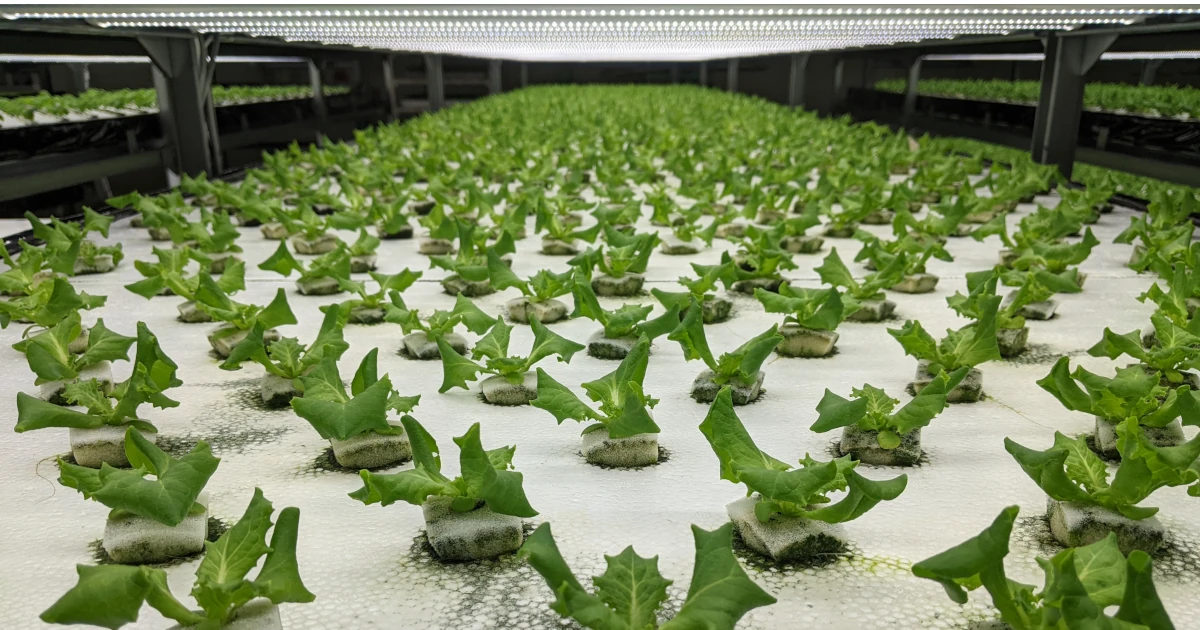
The biggest trap of a turnkey is that you become unable to fix the heart of the equipment yourself. The reassurance of having it all come together, flipped around, also means the HVAC, the control panel, and the software are all “their spec,” and operation starts with the contents left a black box. When something stops, who can isolate the cause first — the people on site, or a support desk across the sea? Layer time zones, language, and business hours on top, and the earlier “time to a technician” gets swapped out from a problem of distance into a problem of contract. Even if there’s an electrician physically nearby, that person can’t touch a proprietary board, and the parts aren’t standard items either, so they have to be ordered in.
Parts supply bites in a quieter way. Purpose-designed lighting units and HVAC units can’t take compatible replacements. It’s fine while the vendor holds stock, but with a model change or the company pulling out, the supply of proprietary parts can be cut off early. A container farm is capital-investment-heavy, so payback runs long, yet the period over which the heart of it can be supplied ends up decided by the vendor’s convenience.
So what you should look at is not how attentive the install is, but the degree of self-sufficiency once operation starts. As someone who sells the know-how and the operational support, I’ve watched, more than anything, whether a site keeps running on its own after handover — and looking through that lens, how attentive the launch is and whether it keeps running self-sufficiently are entirely separate matters. Are the circuit diagrams and control specs shared? Are the consumables standard items you can source locally? Is it designed so a technician can touch it? A turnkey state of “you don’t have to think” is a hair’s breadth from a state of “when it counts, you can do nothing yourself.” In the end this too is the same as site — it’s not a matter of how the box performs, but comes back to a matter of distance and time: when it stops, who can move, and how quickly.
In fact, in this field, the track record of long-term commercial-scale operation, or of reliability across multiple sites, is still thin. Many of the cases introduced in surveys are reports as individual demonstrations or proofs of concept, and they don’t come backed by years of running across multiple sites (see 7). Even within what I’ve seen, much of the talk about having built it cheaply gives the impression of not yet being out of the prototype stage. Between the numbers at install time and the reality of running it for years, there’s a gap that still hasn’t been filled.
Conditions where a container farm fits, and the dividing line from a fixed build
So far we’ve looked at the conditions of where you place it and the degree of self-sufficiency once operation starts. Finally, as a premise for thinking those through, let me set down one more question further upstream: “Is this even a project that should be done in a container?” We’ve proceeded so far on the premise of a container farm, but in practice there’s a division of roles with an ordinary fixed build — a vertical farm made inside a building.
A container farm works precisely under conditions where “the site moves.” A cheap-electricity location isn’t pinned down yet, you want to start small while testing demand, you want to keep the possibility of withdrawal or relocation open within a few years, you want to place it on land where you can’t put up a building — these kinds of situations. Without bearing the fixed cost of putting up a single building, you can start in small units and, worst case, walk away. Even if it’s pricier per unit than a single vertical farm, if there’s value in paying for this “ability to move while still carrying uncertainty,” a container is a reasonable choice.
Conversely, if your site and your buyers are settled and you’ve decided to run it long and large, an ordinary vertical farm fits better. For the same growing area, a single building works out cheaper per unit on construction cost, HVAC, and lighting than lining up several boxes. You can stack the shelving high, and you can consolidate the flow of people into one line. The scale advantage is clearly on the side of the fixed build. Keep adding more and more containers and at some point you hit a crossover point of “it would’ve been cheaper to put up a single building.”
The research bears this out too. Stacking vertically beats open field or greenhouses on yield per unit area, but viewed as food output per unit of energy input, the greenhouse is more efficient, and the selling point of “saving land” can fail to hold once you include even the land needed to supply the renewable electricity (see 8). It doesn’t necessarily win outright on efficiency or scale.
In other words, think of a container farm not as a tool for winning on scale, but as a tool that works as insurance against uncertainty. When the conditions line up — you can’t read the site, you want to try small, there’s a shot at relocation — it does hold up properly. It’s just that there’s a markup on that mobility, and the moment the site and demand are settled, the reason to keep paying that markup fades away.
Let me add one last thing. The power rates, the time until a technician arrives, the distance to your buyers, and the vendor’s maintenance terms raised here are all things you can’t pin down by just staring at the numbers in a catalog or a sales deck. Power rates change if the industrial park differs, even within the same prefecture, and maintenance arrival times and the years of parts supply won’t come out until you read the contract closely. What I’ve talked about here is, at most, “the representative axes you should go after yourself before placing the box,” and it stands on the premise that you verify the actual numbers yourself for each candidate site and each vendor. Site dominates the economics, but it doesn’t decide everything on its own either. Sales channels, consumer acceptance, and the strength of operations all bear on it apart from site. With a container farm, you can already go after the representative axes long before you choose a box — the moment you decide where to place it.