Profitability in vertical farming
is decided on the floor.
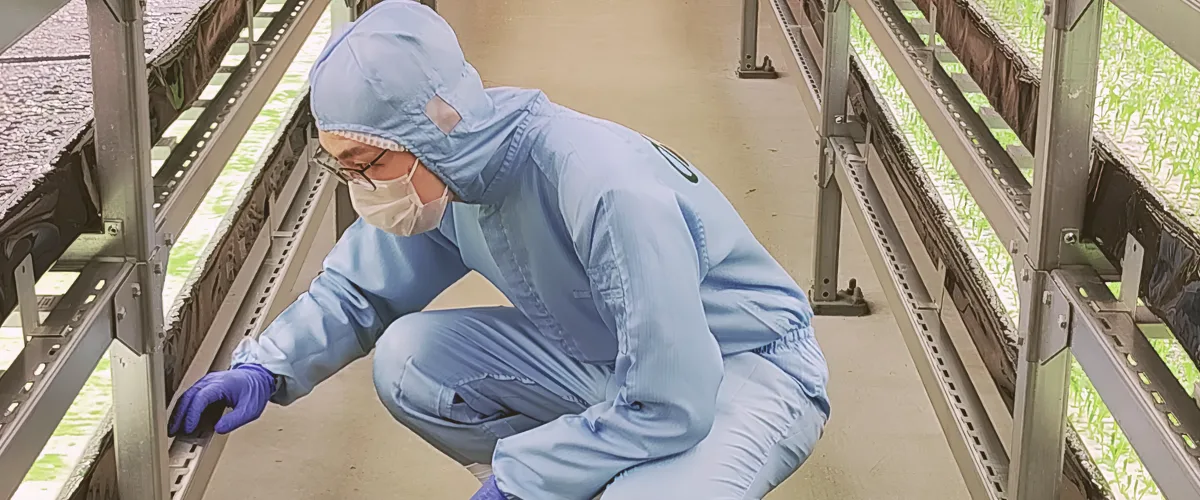
What determines the profitability of a vertical farm is not the equipment or the crop varieties — it’s how the operation is run on the floor. I’m here to share ten years of honest, ground-level experience.
I’ve been working in vertical farming since 2011. Over ten years, at more than ten facilities. There is so much that never makes it into textbooks or onto the internet — things you only learn on the floor. This site is where I write about what I’ve seen, what I’ve struggled with, and what I’ve figured out along the way.
The main content is 172 Hints to Boost Your Vertical Farm Profitability (PDF).
Featured Articles
Vertical Farm Prospects: Judge by Power and Sales, Not Hype
Losses and exits keep piling up, yet new entrants never stop. Does vertical farming have a future? You will not get an answer by framing it as grow-or-die. Whether the industry as a whole expands and whether the one operation in front of you keeps running are separate questions. To size up the latter from the outside, the first things that matter are power, capital, sales channels, and people. Using these four as a footing, we count — one operation at a time — whether starting now still leaves you in time.
Articles
NFT vs DFT Hydroponics: Yield Isn't Set by the System
With hydroponic NFT and DFT, yield is not decided by which one is superior. The method falls out naturally from your scale and the constraints in front of you, and what actually matters is what comes after you choose: flow rate, nutrient solution temperature, dissolved oxygen, and a way to notice when it stops. Drawing on years of watching leafy greens in a vertical farm, I lay out how to choose so you can put your effort into running it.
What Is a Plant Factory? A Living Business, Not a Factory
What is a vertical farm? It often gets lumped together as "a facility that makes vegetables cheap automatically," but a fully closed PFAL and a greenhouse type are different animals inside. How it differs from a greenhouse, what you can grow, why so many are said to run in the red - the basics you want before you step in.
Plant Factory Site Management: Read Plants, Data, Then Plan
What does "vertical farm operations management" actually mean, and what should you learn first to keep a site running? This piece sorts it into three layers—seedling physiology, numeric KPIs, and people and workflow—and shows operators who've come from other industries how to start from wherever they're stuck right now.
Plant Factory Harvest: Stop Feeding Days Early to Cut Nitrate
Push harvest efficiency and quality slips—if you wrestle with this tug-of-war in a vertical farm (artificial light, leafy greens), this is for you. Separate the efficiency-or-quality question into when you cut, how you move, and what you cut with, plus the footing of hygiene and post-harvest handling, for concrete ways to protect quality without giving up much speed—organized from 10+ years of hands-on experience in vertical farming.
Plant Factory Hygiene Management: Cleaning Hits a Floor
In vertical farm hygiene management, why do total viable counts and complaints fail to drop even when you raise the frequency of cleaning and disinfection? The cause is not how often you clean but the structure side -- the zones and the flow of people and things. First you hit the count with washing and drying, then you read the floor that still remains as a sign of structure. I lay out the steps from field experience and the literature.
Plant Factory Know-How: Split Intuition Into Three Layers
How to keep vertical farm know-how from depending on one person. How far can a veteran's intuition and tricks be put into words and standardized, and where does the un-teachable, person-bound skill begin? We sort it into three layers, from the granularity you can capture in a daily log to how you hand things off to a new hire.
Columns
Free Tools
Main Content
172 Hints to Boost Your Vertical Farm Profitability
457 pages, 19 chapters, 172 topics. A practical knowledge collection built from 10+ years of hands-on experience in vertical farming. It brings together "hands-on knowledge from the floor" for vertical farms that you cannot get anywhere else.
View 172 Hints