Farm Operations Management
Plant Factory Know-How: Split Intuition Into Three Layers
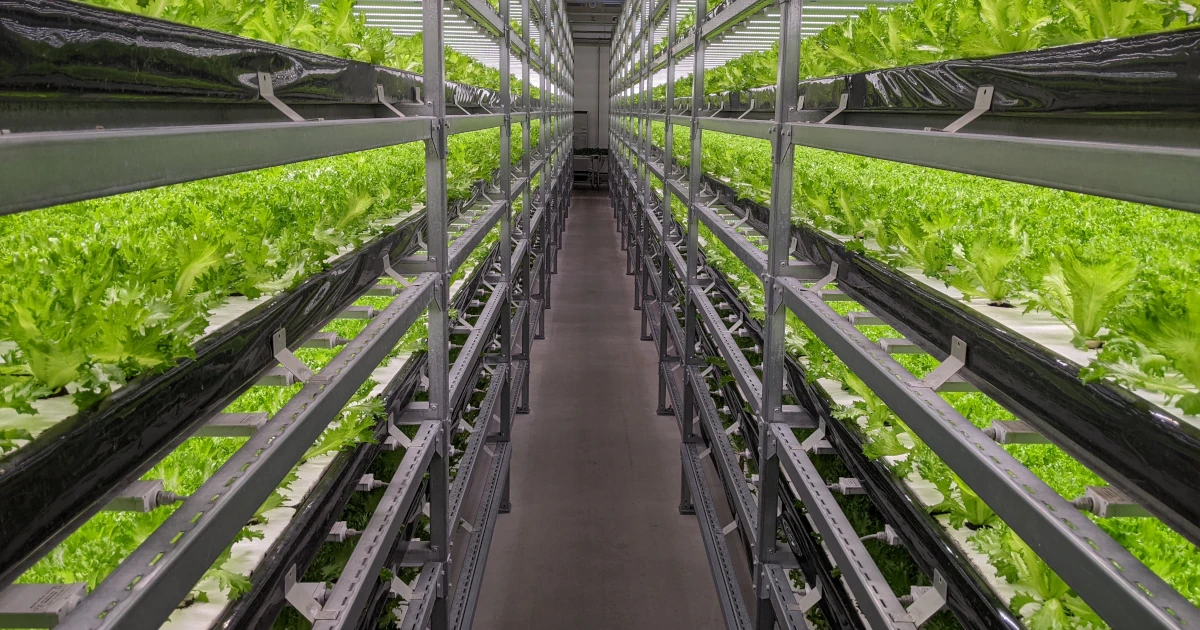
The yield won’t hold steady. Trace the reason, and in the end it always comes back to one particular person’s judgment. The floor is different on the days that person is there and the days they aren’t.
You want to break out of relying on one person, so you add staff, but the results aren’t repeatable. You try to teach it, but you can’t quite put it into words. If they quit, the floor falls apart—at the root of this anxiety there is probably a single assumption. The assumption that intuition is one person’s experience and ingenuity, belongs wholly to that person, and cannot be drawn out.
In this article, let us set that assumption aside for a moment. Don’t treat intuition as a single lump; split it into three layers by how easy each is to standardize. Then you find that mixed into what you are now trying to hand off all at once, there were parts that you could have handed off far more lightly.
A veteran’s intuition can be split into three layers
A veteran decides, just like that, when to harvest. That movement of the hands, that sense of timing—how do you hand it to the next person? Have you ever racked your brain over it? It isn’t something a manual will settle. And yet “watch and learn” means the floor stops the moment that person quits.
Try asking: “How did you decide it was time to harvest? What did you look at?” The answer that comes back is usually “just a feeling,” isn’t it? But watch closely, and the color of the leaves, the shape of the plant, the difference in growth between the tiers of the rack—the person is looking at any number of things. Are they reading definite cues that they simply can’t put into words, or is it truly an on-the-spot overall judgment that can’t be turned into a fixed form? Have you ever been caught between those two?
The person’s “just a feeling” is neither a lie nor laziness; it is probably the truth. But “an overall judgment that can’t be put into words” and “can’t be turned into a fixed form” are not the same thing.
When I look at a veteran’s judgment by how easy it is to standardize, I roughly split it into three layers. The first layer is the readings an instrument gives. These come out directly as numbers, without passing through the person’s senses. But the number itself does not become the judgment. Whether that instrument reading can be trusted—whether it is properly calibrated, where it was measured, and, on a multi-tier rack, how to read the difference in growth between tiers—is already a judgment in the next layer. Even within the range I have seen with leafy greens in a PFAL, growth diverges between a tier where the airflow stagnates and one where it doesn’t, even in the same room, and a single number from an instrument misses the actual state of the floor. So I draw the line this way: the first layer “stays as a number,” but how you read that number passes to the second layer. The second layer is judgments that branch on conditions. The branching goes like this: the leaves look like this, it’s this time of the season, the shipment is headed for this destination—so I’ll take it. Even when the person can’t say it, if you stand alongside and keep asking “why didn’t you take it just now” over and over, candidate cues start to come up. But an explanation given after the fact can diverge from the actual judgment, so you need to cross-check it multiple times and across multiple people to raise its reliability. The third layer is the part that is truly hard to put into numbers, like the feel of the hands.
The crux is not to try to turn everything into a fixed form from the start. Leave the three layers mixed together as one lump called “intuition,” and it becomes hard to hand off. Isn’t this what’s happening on many floors? Pull out, ahead of time, the part of the first and second layers you can put into words, and a good portion of the intuition can be moved over to ordinary handover items. The second and third layers can’t be cleanly separated. The part whose outline emerges through interviewing and the part that stays in the hands to the end are connected by a gradient. What remains is that part that stays in the hands. It is the so-called “watch and learn” target. Because people tell others to “watch and learn all of it” without separating that part out, the floor stops the moment they quit.
One concrete example of the third layer. My experience is limited to leafy greens in a PFAL, but judging the timing to harvest is exactly the kind of scene where this layer matters. There is an instrument-like guide in the number of growing days from sowing or final planting (the first layer). But in the end, you look at the appearance—the color of the leaves, the shape of the plant—and decide whether to take it now or wait a day. This reading of appearance tends to stay in the hands, never fully turned into words. Lay the number of growing days down as the foundation, and hand off the final call by standing alongside and demonstrating it—separate the three layers instead of mixing them, and things sort out this cleanly.
A similar story shows up in a case that dealt with handing down knowledge. A company doing protected cultivation of leafy greens, newly set up after a disaster. When they combined a manual with demonstrations in which a skilled worker actually moved their hands to show the work, the speed of harvest went up. The number of heads harvested per hour is said to have increased by 358.5 on average (Ref. 1). This is the gain in proficiency (the difference) in how much faster a new hire became over a set period—it is not a number you subtract directly from your own floor’s yield per hour. It is a single, and moreover unusual, company’s situation, so you can’t generalize it as is either. Even so, it is also said that setting up an environment where people can work with focus supports this kind of knowledge sharing. Putting intuition into a system does seem to have something going for it. But what you can’t overlook is that the effect comes from bundling demonstrations with the manual, not the manual alone. You can also read it as: it worked because they didn’t force the third layer into words and instead handed it off through demonstration.
Put words into the everyday daily log
Standing alongside and listening dozens of times to draw out the outline of the second layer’s “judgments that branch on conditions” takes a fair amount of time and manpower. And you have to do it while the veteran is still on the floor, or you won’t make it in time. Yet on the floor, you tend to fall behind—starting in a panic only once you know that person is leaving, don’t you? When, and by whom, does the work of drawing it out begin?

Even if you start after you know they’re leaving, it’s often hard to make it in time. So the answer to “when” is not to set it up as a special project, but to dissolve it into the daily work.
Stopping the floor for the sake of recording, sitting the veteran down beside you to interview them—do it this way, and both the floor and the person tend to tense up, and it doesn’t last. It tends to fizzle out after a few tries. Instead, in the daily log or handover, add one reason in a single line only on the days the judgment was a close call. “Didn’t take it today, the leaf color hadn’t come in yet.” Try to write it every single day, and it’ll be the first thing dropped in busy periods. One line runs as an extension of ordinary work.
As for who: rather than having the veteran put it into words themselves, the junior working beside them writes down “what, when, and how” in a single line. That seems to run more smoothly. Since the person can only say “just a feeling,” the side holding the question does the recording. But the “why” part can’t be filled in unless the veteran answers it on the spot in a word or two. For a veteran who gives no cooperation at all, this method won’t reach. That is exactly why you should move ahead not after they’ve given notice, but while things are still normal and they’re still cooperative—ideally while tying “leaving a record of your judgment” to evaluation.
Build it up little by little this way, and when the talk of quitting comes up, you can cut down on the last-minute scramble to interview them. But just building it up doesn’t hand it over. The reasons that come up again and again—read them back now and then and re-bundle them as conditional branches. This bit of extra work is needed. The single line the junior wrote, too, should ideally be confirmed later with the veteran in a word: “is that understanding right?” That makes misreadings less likely to get locked in. Rather than making it in time, you’re building, while things are still normal, a state in which you will be in time.
This feeling that “if you stop the floor, it won’t last” is also pointed out in similar terms when you bring in a measurement setup like ICT. One evaluation compared measurement instruments used in greenhouses based on catalog information. In comparing products, there was also a tendency to weigh stable operation and ease of installation (Ref. 2). This is about product evaluation for greenhouses, so it doesn’t necessarily apply directly to leafy greens in a PFAL. Even so, the reason dissolving it into a single line of the daily log is easier to keep up is probably also because this “lightness” is at work.
Here is one thing I want to set down honestly. Before you ask “how do I hand down intuition,” there is also the option of asking whether you can avoid having to hand it down at all. Of the second-layer judgments, increase the part you can measure with an instrument and push it up to the first layer. Redesign the work itself to reduce the scenes where judgment is needed. Simplify the criteria so it comes down to the same procedure no matter who does it. If you can reduce the total volume of intuition itself this way, you need neither someone to hand it to nor the effort of handing it off. This is a correct direction as the main line, and where you can, you’d do better to move things over there. But the parts that automation and standardization can’t fully reach—the second and third layers that stay in the hands to the end—do remain no matter what. So read this article as dealing with “how to hand off what remains after you’ve moved over what can be moved.”
When you borrow another facility’s methods too, this separation becomes the very axis for the call. If the type (PFAL or greenhouse) and the crop (leafy greens or fruiting vegetables) are close to your own floor, you can move things over down to the numbers and procedures. If they diverge, don’t bring in the numbers themselves; borrow only the way of thinking about how to carry it: “a heavy setup won’t last, the lighter it is the more it takes root.” Work out what has to match before you move it over, and what kind of difference limits you to borrowing only the idea. Sort that out in advance, and you can use cases safely.
Back to the first question. How do you hand down intuition? The answer was: don’t try to hand off all of it. The first-layer instrument readings stay as numbers to begin with. The second-layer judgments that branch on conditions can be moved over to handover items if you let the single line from the close-call days build up while things are normal. Only the third layer that stays in the hands to the end is left as the territory you hand off by standing alongside and showing it through demonstration, without forcing it into a fixed form. Stop calling all three layers mixed together “intuition”; pick up the first and second layers you can hand off, lightly, first, and narrow demonstration down to just the third layer you can’t. Once you can make this separation, intuition is no longer “something that vanishes with the person.”
For putting the first and second layers into words, besides the path of interviewing your own veteran from scratch, there is also the path of using someone else’s already-articulated know-how as a foundation. Even without re-gathering all of your floor’s second layer from zero, if you start from the practical knowledge that has already been put into words and standardized for building revenue, you can offload part of the interviewing effort onto that. The tricks that have been put into words for building revenue in a vertical farm are collected in 172 tips to raise the profitability of a vertical farm. Use it as a reference alongside this.