Economics and Profitability
Listed Vertical Farm Firms: Group Profit Isn't the Farm's

You scan a list of listed companies and pick out one with a hunch: “If it’s vertical farming, this company.” If the books show a profit, you relax for now and move on to the next candidate. Many people screen this way. But that profit—where was it earned? The company-wide figures and the figures for the vertical farm business itself are two different stories.
Why a company can look profitable even when the vertical farm is in the red
Line up the segment information of listed companies that run vertical farms, and one shape starts to show. The vertical farm portion is in the red, yet the company as a whole is in the black and stays comfortably listed. With one company you might put it down to that firm’s particular situation, but line up several and the same shape keeps appearing. This is no special feat of financial analysis—read the disclosed segment information plainly and anyone sees the same shape.
What catches the eye as you line them up is how many of these companies have an entirely separate core business. Electronics makers, steelmakers, logistics firms. They earn solidly from that core business, and they hold the vertical farm as a separate brand, positioned like a new venture. Is it fine to look at this simply as “the company-wide numbers are good, so it’s safe”? Think it through, and whether the vertical farm itself is making money and whether the company’s stock is being bought have become almost two separate stories. You were looking at the company because you wanted vertical farming as a reference, but what you can actually see is the muscle of the core business.
Push one step further and you can say this: the vertical farm of a listed company is not held up by the soundness of the company as a whole—it runs as an ancillary business cradled by the profits of the core business. There is nothing on the vertical farm side to justify the sense of safety. Running as an ancillary business means some companies will have no reason to stop the vertical farm even when it is in the red, as long as the core business keeps earning. Put the other way around, it is not surviving because it turned a profit. That said, a factory cradled by the core business does not necessarily stay forever. An analysis tracking Japan’s vertical farms reports that over the decade from 2012, roughly 80% of them disappeared at one point, replaced by nearly the same number of new entrants (see: 5). Some companies keep cradling them; just as many factories get wound down at the convenience of the core business. The decision to exit is easily dragged along by the core business’s circumstances rather than the vertical farm’s own economics. Brand advertising, the pretext of R&D, a green appearance—the moment the meaning it held for the core business is cut off, it gets wound down. So when you look at such a company as a reference for investment or entry, what you really want to see is not so much the size of the loss in the vertical farm segment itself, but how long and on what logic the core business intends to keep cradling that loss. You are looking because you want to know the viability of the vertical farm, yet what you see is the depth of the core business’s pockets and the shelf life of the meaning the vertical farm holds for that company.
The numbers, too, show there is fertile ground for vertical farms to be cradled as ancillary businesses. In the Ministry of Agriculture’s field survey of Japan’s vertical farms and large-scale protected cultivation, even the most recent edition (FY2025 version) finds that about half of PFAL operators are in the red. Greenhouse and hybrid types, on the other hand, are over 70% profitable or break-even, and overall, profitable-or-break-even exceeds 60% (see: 1). There is year-to-year fluctuation, but the PFAL this article mainly deals with—the windowless, fully artificial-light factory—still has roughly half failing to reach the black. That is the outline of the reality. And look at the lineup of entrants: semiconductors, electronics, steel, lighting, logistics racks—manufacturers that already have a separate core business stand out. The common shape is that they came in because they can leverage their core business’s equipment and technology (see: 2). The very fact that entry has continued even with half in the red tells you that vertical farms have been cradled for reasons other than standalone economics.
The line that separates a protected loss as cultivation from one as complacency
From here on I’ll fold in my own sense of things from when I was inside a PFAL factory. While the core business is cradling it, the people inside the vertical farm can run it in a state that, in a way, is heavily protected. The pressure to turn a standalone profit is weaker than at an independent company. Back when I was on the operations side of a PFAL factory at Farmship, there were times I felt in my bones the air that “this business is protected by the parent.” Is that a good thing in the sense of nurturing the technology? Or is it the reverse—a breeding ground for never having to face the harshness of break-even? Precisely because the core business can carry it on sheer financial strength, it can keep up the pretense of “a business that will turn a profit someday” for a long time. That side of it, too, you come to see from inside.
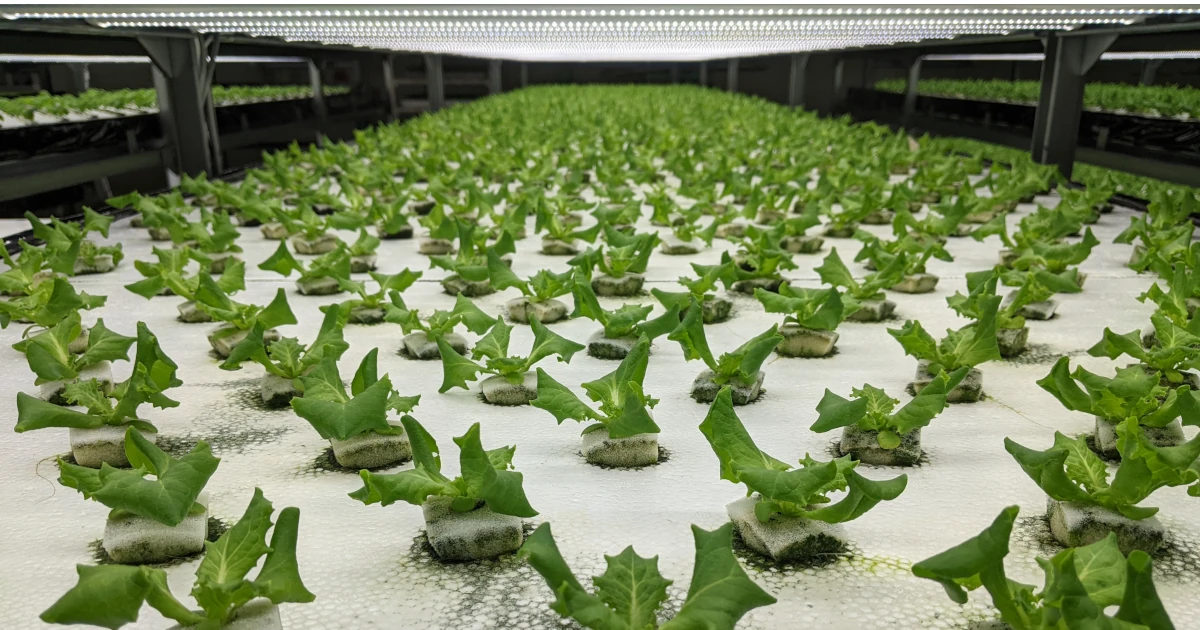
Is being protected cultivation, or is it complacency? The very way that question is framed carries the structure of the ancillary business straight through. What decides cultivation versus complacency is not the attitude or effort of the people inside the vertical farm—it is what the core business expects of that loss. If the core business sees the vertical farm as a business that will someday stand on its own, then the protected period is cultivation. Easing the pressure of profitability until the technology firms up is a rational investment. But if the core business holds the vertical farm only for advertising or appearances, that same protection turns into complacency. No one is asked to turn a profit, so no one seriously tries to. The same loss, the same protected state—yet the meaning flips to the opposite depending on which of the two expectations comes down from above.
The awkward part is that, from the outside, the substance of that expectation is hard to make out from the financial statements alone. The bare fact that the loss has run for a long time cannot tell you whether they are nurturing it or neglecting it. The pretense of “a business that will turn a profit someday” holds up because the financial muscle of the core business can keep absorbing the loss without ever being asked what the expectation actually is. So if you want to tell them apart, you look not at the length of the loss but at whether the core business is making concrete promises about that vertical farm. By when, this scale, this use, this customer. A company that names exit lines or break-even deadlines is placing expectations on it—a clue that it is on the cultivation side. Conversely, a company that speaks only in words that can never be disproven—“part of our R&D,” “an investment in the future”—you can take as having entered the structure of complacency. Not the protection itself, but whether the protection has a deadline and substance. That is where the line between cultivation and complacency lies.
What the core business expects of that vertical farm has been organized, even in studies of vertical farming, into the form that there is no single model for the management. Beyond the model of earning by selling vegetables, there are several models lined up—creating a new high-value market, supplying existing food-service and food channels stably, holding it as a site for research and experiment—and the positioning shifts with the industry and aims of the company that entered (see: 3, 4). Even when they all “have a vertical farm,” what they are cradling it for differs quite a lot from company to company.
Do not read a rising share price as the vertical farm’s future
If the substance of the financials is that hard to read, you are tempted to lean on another clue. What many people reach for is reading the share price itself as the clue. They see a headline that a vertical-farm stock’s price has risen and take it to mean vertical farming is growing, the industry has a future. They use the share price’s movement like a barometer of the whole industry’s momentum. Many of you may recognize this in yourselves.
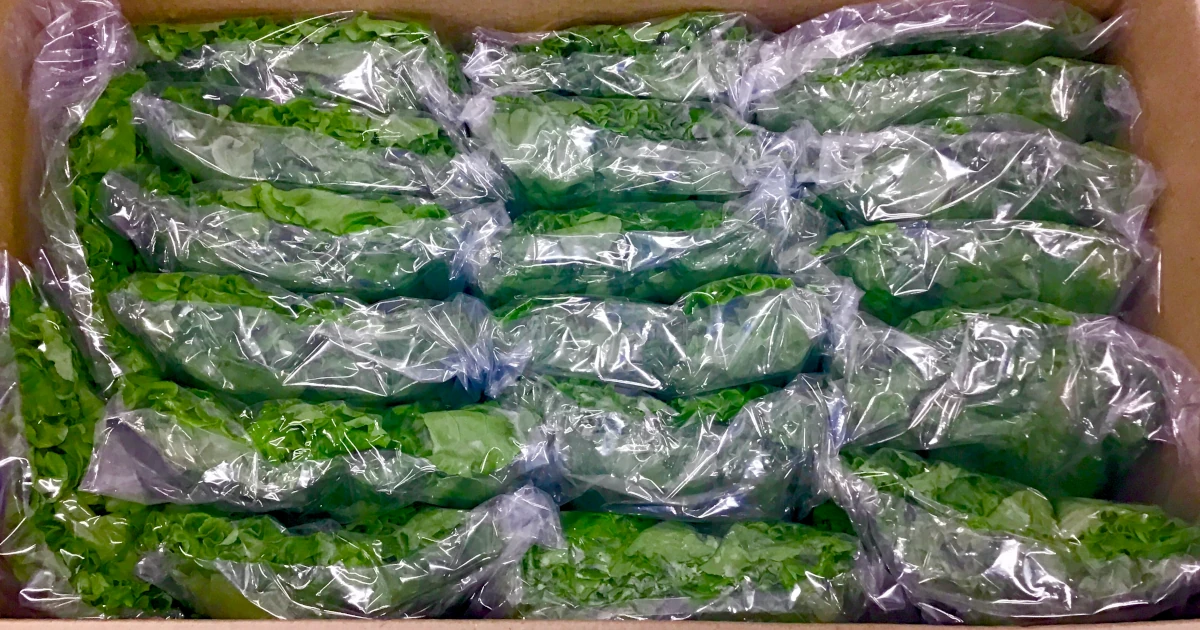
But this, too, is a story about the core business. At a company that runs a vertical farm, what is being bought in the end is that core business. If so, even when the share price rises, you ought not be able to separate whether it is a valuation of the core business or of the vertical farm. What snags you is the headline: write “vertical-farm stock rises” and it reads as if the vertical farm is growing. In reality the share price may be moving on the core business’s strong results or on some other catalyst. If anything, a pure-play company that does vertical farming alone—where the market’s valuation becomes the valuation of the vertical farm directly—would seem to be far more useful as a reference. That thought starts to form too.
There are two layers here. One is the impossibility of separation. Even when the share price rises, you cannot split out whether it is a valuation of the core business or of the vertical farm. Because the vertical farm is cradled as an ancillary business, what the market is pricing is the earning power of the core business, with the vertical farm dangling off it. When a news headline writes “vertical-farm stock rises,” it is swapping the subject. The mere fact that the stock of a company that does vertical farming has gone up is made to read as if the vertical farm itself has been valued.
The other is that the share price is not even a proxy for future prospects to begin with. What the share price reflects is not whether the business will grow, but whether market participants think it will. Sometimes it is merely being chased as a theme stock. So “share price rose, therefore there is a future” is, before any question of separation, a mistaken way of reading the share-price indicator itself. If you want to know the viability of a vertical farm, the share price is not the place to look in the first place.
On top of that, I half-agree with the view that a pure-play company is more useful as a reference. For a pure-play, the market’s valuation becomes the valuation of the vertical farm directly. In the sense of not being hidden in the shadow of a core business, it is a pure object. But looking pure and being a stable reference are two different things. A pure-play company has no buffer of a core business’s muscle. So a loss turns straight into a survival risk, and the share price, running ahead on expectations, swings wildly. That the market’s valuation becomes the valuation of the vertical farm itself is, flipped around, also to say that a single stumble in market sentiment or cash flow can blow away the valuation regardless of the business’s actual strength.
To put it in order: look at the ancillary business of a listed company, and what you see is the depth of the core business’s pockets, while the viability of the vertical farm blurs. Look at a pure-play, and the viability of the vertical farm comes into sharp focus—but now survival risk and the noise of market psychology ride along. With neither can you use the share price directly as a yardstick of future prospects. That a pure-play is more useful as a reference is correct in the sense that it is a pure object, and in the sense that the share price becomes a trustworthy yardstick, it still does not hold. In the end, what you should watch is not the share price but the substance: on whose expectation, and what kind, the business rests, and for how long and under what conditions it will continue.
Why time and scale will not solve the economics for you
What you should watch was the substance. Then, granting that you look at the substance, the question remains whether it will simply get better if you wait. The common line is that it is still the early days, so once the technology matures and the scale grows, the economics will eventually work out. It is in the red now, the line goes, but time and scale will solve it.
This expectation is best taken with a heavy discount. There are two reasons, both rooted in the structure of the vertical farm.
One is that scaling up does not automatically bring the economics along with it. Look at a study that systematically analyzed the construction cost of vertical farms: scale it up, and the construction cost per unit does indeed fall. Increase the scale a hundredfold, and the per-unit construction cost is estimated to drop by about 55%. But the effect is weaker than in ordinary manufacturing, and the economies of scale themselves are said to be on the small side (see: 5). The problem starts here: the effect is only on the construction-cost side. Add cultivation racks and the lighting, the HVAC, and the water all increase in proportion. In other words, the daily operating costs—electricity, HVAC, water—are structured so that scaling up does not thin them out. In fact, a meta-analysis spanning 116 studies across 40 countries also shows that the energy intensity of vertical farms (energy consumption per yield) does not correlate with facility scale (see: 8). Construction cost may fall somewhat with scale, but the operating cost that weighs heaviest on the economics does not come down with scale. So the expectation that “make it bigger and the economics will arrive” tends to miss if you apply manufacturing common sense as is. It is not that there are no economies of scale—it is that the place where they work is off to one side of the heart of the economics.
The other is energy. What weighs heaviest on the economics of a vertical farm is that it supplies, with electricity, the light and HVAC that stand in for the sun. The core of the “time will solve it” expectation is that this energy cost will eventually fall. But whether efficiency improvements can cancel it out—there you should look carefully. The same meta-analysis reports that between facilities that installed mechanisms to improve energy efficiency and those that did not, no large difference appeared in energy consumption per yield, and that the effect of efficiency improvement is limited. Even across the data from 1993 to 2024, no clear downward trend in energy intensity is seen (see: 8). However much you tighten efficiency on the technology side, if the underlying energy price is not heading downward, what you trimmed gets canceled out. If energy prices do not come down going forward, on this conditional reading, overturning the economics on efficiency improvement alone will be hard.
The difficulty of energy’s leverage shows up on the crop side as well. In PFAL, electricity for lighting keeps taking up a large part of operating costs, and the read is that grains like wheat are too heavy in energy per yield to pencil out for the time being (see: 6, 7). The thin economics that leafy greens like lettuce manage to scrape together simply do not hold for crops that require more energy. This, too, is the flip side of energy staying lodged at the foundation.
What’s more, the economics estimated for PFAL lettuce turn out to be quite fragile against changes in market price. The same analysis that estimated a break-even line using lettuce as an example shows that if the selling price of lettuce drops by 20%, the cultivation scale needed to reach the black jumps sharply, and small factories that had been profitable tip into the red (see: 5). This is a desk model built under the specific condition of lettuce monoculture, and it does not mean every crop and every business will collapse exactly this way. Still, behind the structure of “it keeps going despite losses because the core business cradles it,” the vertical farm business on its own sits on a thin foundation where the economics can crumble with just a small move in the selling price. As one example of that fragility, it is worth keeping in mind.
Reading financial statements and disclosures in five stages, from weight to promise
Even once the direction you should watch comes into view, the most practical part remains. When a listed company running a vertical farm is in front of you, where in the financial statements and disclosures should you look, and in what order? I have pointed to the direction of “look at the segment information.” So concretely, what do you pick up to reach the distinction between an ancillary business being cradled and a business that seriously earns? Here I’ll hand it over as a procedure.
Open the financial statements, and instead of diving straight into the details, work down from the top in order: weight, profit, positioning, capital, promise. I’ll explain it as a five-stage procedure.
First stage: look at the sales weight in the segment information. What percentage of company-wide sales does the vertical farm business make up? At companies where it is cradled as an ancillary business, this ratio tends to be small—not rarely staying in the low single-digit percentages. At this point, the fact that the company-wide figures are not a valuation of the vertical farm becomes visible as a number. The smaller the weight, the higher the chance it is being cradled as an ancillary business. Conversely, if it makes up 20% or 30%, it may be a candidate for a main pillar meant to earn seriously, so you change your read. That said, a large weight and turning a profit are separate axes. When the weight is large, a loss cuts all the deeper. So once you’ve taken aim with weight, you confirm the profit in the next stage.
Second stage: in the same segment information, now look at the profit side. Segment profit, or operating profit, should be lined up right next to sales. Is the vertical farm in the red or the black, and if in the red, how many hundreds of millions of yen? Then line it up against company-wide operating profit and see what share of the core business’s profit that loss eats. If the loss is a tiny part of the core business’s profit, it is cradled painlessly. This is the true nature of the state where the core business absorbs it, and by here the structure is largely visible.
Third stage: confirm whether that vertical farm is core or non-core to the core business, by the words and by where it is placed. Does the segment stand on its own name, or is it tossed into “other”? In the business description of the securities report or in the medium-term management plan, is the vertical farm spoken of as a pillar of the growth strategy, or is it touched on in a single perfunctory line? Whether the vertical farm’s name appears in the numerical targets of the medium-term management plan is an especially clear dividing line.
Fourth stage: look at how it is propped up by capital policy. Pick up the cash flow statement and the announcements of capital raises, subsidies, and tie-ups with local governments. Is the vertical farm’s capital investment funded by its own cash, or does it only just hold together on capital raises, subsidies, and local-government recruitment incentives? If the economics stand only on the premise of subsidies, that is not the business’s own strength but an external prop, and you need to picture separately what happens when the support is cut off.
Knowing the industry-wide situation here makes the fourth stage easier to read. Japan’s vertical farms have, until now, had considerable sums of subsidies poured in from the national and local governments. Even in the most recent field survey, many operators are using government subsidies for capital investment and energy-related costs. And still, the result is that about half of PFAL are in the red (see: 1). In other words, subsidies have worked less as a force that makes the economics stand up and more as a force that pushes entry along. The more a company runs on the premise of subsidies or local-government recruitment, the more you need to read the external prop and the business’s own strength apart.
Fifth stage: look for concrete promises like exit lines or break-even deadlines. But here, if you judge only by “is it being stated now,” you’ll be tripped up. By-when break-even, this scale, this use, this customer—such deadlines and numerical targets are, in fact, the easiest part to dress up in IR materials. It is not rare for a company to set a clean target once, miss it with no one cross-checking, and quietly overwrite it the next term. So what you should watch is not the words now, but how well it has kept the promises it set in the past. Trace back several years of earnings-briefing materials and medium-term management plans, and cross-check what became of the deadlines, scales, and uses set earlier. Were they achieved, quietly postponed, or did the words get swapped out at some point? Only when the track record of words and results lines up does it become visible whether a company is on the cultivation side or merely cradling. A company that names neither deadline nor substance and speaks only in undisprovable words like “part of our R&D” or “an investment in the future” can be taken, at that point, as having entered the structure of complacency.
What’s good about this order is that with the first and second stages alone you can settle, with numbers, that this is an ancillary business, and from the third stage on you can go check whether it is, however, a serious exception. Grasp the structure with weight and profit, see how it is propped up with positioning and capital, and settle whether it is cultivation or complacency with the promises and their fulfillment history. With the four documents on your desk—the earnings summary, the securities report, the medium-term management plan, and the earnings-briefing materials—you can chase all of it starting today.
Separating the vertical farm business from the signboard of being listed
So far we have come down to a form you can chase on your desk, from weight to promise. The vertical farm business’s contribution to earnings, how non-core it is relative to the core business, how it is propped up by capital policy—these, which come out of the five stages, are the viewpoints you’ll want to assemble for yourself when you look at a listed company as an investment target. And if you layer on the correction terms unique to vertical farming, the resolution of your read goes up. That in the population, about half of PFAL are in the red; that subsidies have worked less as a force that creates the economics and more as a force that pushes entry along; that neither widening the scale nor letting time pass improves the economics on its own, on the side of the heart of the economics (operating costs). Read with these three corrections added to the frame of ordinary segment analysis, and you can get a feel for the vertical farm as a business.
There is one line I want to draw. What I have been talking about is, strictly, a way of reading the substance of the vertical farm business—not which stock you should buy or sell. Even using the same way of reading segments, the investment judgment beyond that is something each of you makes on the whole, including the valuation of the core business. This way of reading does not say that listed means safe, nor that unlisted means suspect. What I am watching is one thing only: on whose expectation, and what kind, the vertical farm is being carried. Put the other way around, once you can see that one point apart from the share price and the signboard of being listed, you’ve taken away most of what this piece is about.