Economics and Profitability
Vertical Farm Success: Pick Crops Backward From Buyers

When you are collecting success stories, your boss or your investors ask, “Can’t we do it like that company did?” By now you may already have a list of factories that turned a profit lining up on your desk.
But before you look at the cases one by one, there is one question worth settling first. Did that profit come because that company’s methods were superior? Or did it come because the conditions just happened to line up?
This is the entry point that separates what you can copy from what you cannot. In this article, we read success stories not as “winning formulas” but as a bundle of conditions—location, power, sales channels, crop—and as a story about the frontline capability that runs that bundle.
A success story is not a winning formula but a bundle of conditions
A fellow operator once told me, “We turned a profit with lettuce.” That one line stuck oddly in my head. When you are deciding whether to start a new vertical farm or keep running the business you have, don’t you first go looking for “a case that’s working” or “can’t we do it like that company did?” That person tells you, very concretely, about “the yield this way” and “the sales channel that way.” But the more you listen, the less it feels like you could copy it as-is at your own site. The location is different. The terms on the electricity bill are different. When you compare a few success-story articles and seminar talks, you start to think, “In the end, isn’t this just that company’s specific conditions happening to line up?” It looks less like a winning formula and more like luck, or a story about the combination of conditions. Haven’t you had that experience?
That feeling—“the more I hear, the less I think I could reproduce it at my own site”—is the most honest reaction. The very fact that, on hearing they turned a profit with lettuce, you didn’t immediately move to copy it, means you have already seen through to the essence. A vertical farm success story is not a winning formula you can copy; it is a “bundle of conditions” that only works when location, power, sales channels, and crop happen to mesh. So if even one condition is different, the same method produces a different result.
Here is one thing I want to make clear. These four are not an exhaustive frame that names every condition for success. They are the entry axes for breaking a case down by “can I copy it, or can’t I?” Location and power are conditions fixed at the outset that you cannot move; sales channels and crop are conditions you can rearrange later—first you untie the bundle along this line. So I don’t want you to read it as “line up the four and you’ll be in the black.” Use it as the first ruler for telling which parts you can move and which you cannot.
The “yield like this, sales channel like that” story that operator told you is neither a lie nor an exaggeration. At their factory, that was genuinely the case. But what is being told is the result; the foundation underneath—why it held together—is usually invisible even to the person telling it. The location was blessed with good climate and a good site. It was a region with cheap electricity. There was a stable foodservice sales channel nearby that took the product. The quality that channel demanded happened to match a crop that was easy to grow. Those “preconditions that were in place” drop cleanly out of the success story. There is no ill intent on the teller’s side; conditions that are too obvious to them simply go unmentioned.
But this isn’t a story where everything comes down to luck either. Once you grasp it as a combination of conditions, the next thing to do is not “how do I copy that company” but to lay out, one by one, “in my own case, of location, power, sales channels, and crop, which are in place and which are missing.”
Lay the research side by side and you hear the same thing. Whether indoor cultivation is good or bad gets evaluated less by the technology itself than by where you build it and what kind of electricity you bring in—and that is what flips the verdict. This comes up again and again. Even with something widely assumed to be “good for the environment because it’s grown locally,” depending on the climate and energy source the load can actually be higher than conventional agriculture, and shortening transport distance alone does not decide whether it’s good or bad. So “the preconditions that were in place drop out” is not just a matter of feel; it is backed up by the fact that the same technology gets the opposite evaluation depending on conditions (See: 1, 2). Both initial investment and operating costs are high, and whether the books balance remains the single biggest barrier to wider adoption. Both economic analyses and review articles make the same point (See: 3, 6).
Use location and power as cut-offs and work backward from sales channel to crop
When you look at a success story, aren’t you unconsciously fixated on “sales channels” out of the four? More than the technology or the novelty of the crop, what you want to know is, in the end, where it sold. But location and power are all but unmovable the moment you choose where to start. Conditions you can do something about later, and conditions fixed at the outset that you cannot change, are mixed together inside a single success story. And when you look at a success story, you read the part where the “unchangeable side” happened to land as if it were a story you could reproduce through your own effort. This is the most dangerous way to read it. So if location and power can’t be moved, is what you can really learn from a case nothing more than how to combine sales channels and crop?
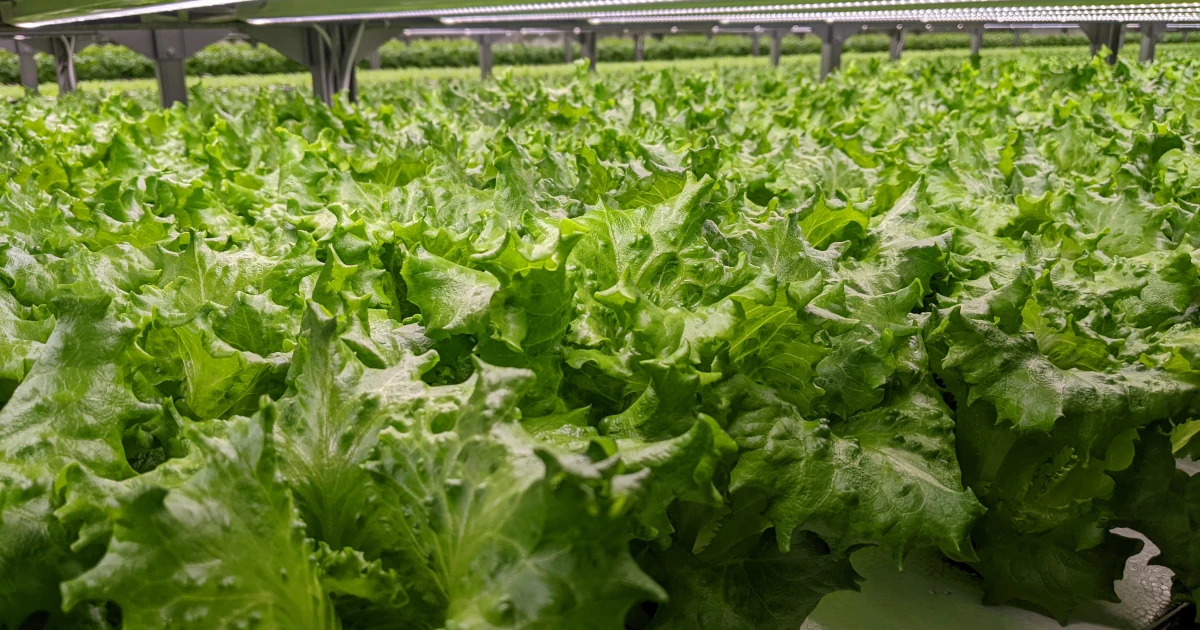
To answer this question up front: reading the part where the unchangeable side happened to land as a story you can reproduce through effort—this is the single biggest pitfall of success stories. Still, it is too early to throw out location and power as “things you can no longer learn from.” It is true they can’t be moved, but that is only true of “the place you are about to build.” If you haven’t decided on a place yet, location and power are exactly the most important judgment you can never take back later—the one you only get to choose once. So the correct way to read location and power from a success story is not to “copy” it but to “learn the cut-off criteria.” If you understand that a factory worked because it was in a region with electricity this cheap, then you can draw the line that in any place with worse conditions, the same crop and the same sales channel will not work. You use it not to reproduce, but to rule out your own candidate sites.
On top of that, if the premise is that the place is already decided, what you can move is effectively “the combination of sales channels and crop.” But be careful about the order. Lead with the crop and you slip onto the most treacherous path: “if I grow something unusual it should sell.” What is resistant to collapse is the order where you first set your own unmovable conditions—location and power—as fixed values, and within that range decide on a sales channel that will stably take the product first. Only once the quality and volume the channel demands are fixed do you work backward to “so what crop can I grow at that condition, at my own power cost?” That said, in reality there are plenty of projects where a subsidy locks the facility in first, the crop is decided first, and only then is a sales channel sought. It isn’t that leading with the facility is bad; rather, in that case, see it as the bundle being more brittle by exactly the amount the sales channel was put off. When you read a case too, look at it with an eye for whether they fixed location and power as constraints and worked backward from sales channel to crop—or where the order broke down—and the parts you can and cannot copy come apart cleanly.
Using the electricity bill as a cut-off criterion is also at the core of the research. In a fully indoor PFAL, electricity accounts for roughly 20% to 40% of total production cost, and of that electricity cost, lighting eats up 60% to over 80%. Per kilogram of harvest, indoor cultivation runs to about 250 kWh, while open-field gets by at close to one-thousandth of that. It’s that order-of-magnitude difference (See: 4, 5). So what “how you bring in electricity” lets location decide is the order of magnitude of the electricity bill—and no amount of later efficiency overturns it. From my own gut sense, having been involved in running PFAL lettuce factories, the order of magnitude itself is settled by the location you contracted for, and no matter how hard you work on the floor you cannot move it. What you can move is a few tens of percent within that order—tightening the lighting schedule to match the cultivation, or rethinking how the lighting is used, to cut energy consumption that far. In fact, the same line of research reports that dynamically controlling brightness over time can lower lighting’s electricity cost by a little over 10%. So writing off “electricity can’t be moved” as a binary goes too far; the accurate read splits it in two stages—location decides the order, and a few tens of percent within that order move with operation. Land and water you can save, but electricity is where you stumble badly. This same asymmetry comes up repeatedly across various studies.
The order of working backward from sales channel to crop also bites when you look at how much the selling price shakes the bottom line. In one estimate for PFAL lettuce, under standard assumptions the minimum scale at which lettuce breaks even is a cultivation area of under 40 square meters. Yet a mere 20% drop in the price of lettuce makes that break-even point leap all at once to 1,700 square meters (See: 6). With the same facility and the same technology, just a slight move in “how much it sells for”—decided by the sales channel—changes the required scale by an order of magnitude.
Failure cases are what teach the bundle of conditions clearly
Factories that have withdrawn do not gather as cases. What surfaces is all profit stories, and the factories that didn’t work out tend to get dismissed in a single phrase: “that was a management mistake.” Up to here I’ve explained “how to read factories that succeeded.” On the flip side, how should we treat the factories that disappeared? In fact, that way of dismissing them is just as risky as copying a success story whole.

The reason is that the factory that failed teaches the bundle of conditions best of all. Because withdrawal cases go untold, you look only at the side that survived and convince yourself “this is the winning path.” This is survivorship bias itself. It’s the same as looking only at the planes that didn’t crash and getting the location of the bullet holes wrong.
And dismissing it as “it was a management mistake,” though the symptom differs, is at root the same as copying a success story whole. If anything, it’s just facing the other way. In success stories, “the preconditions that were in place” drop out. In failure stories, “the condition that was missing” gets swapped for the single phrase “a management mistake” and hidden. The power cost of the land was higher than expected. There was only one buyer, and that buyer dropped its price. The chosen crop couldn’t stably deliver the quality that channel demanded. In truth, one of location, power, sales channels, or crop was simply missing from the start—yet it gets turned into a story about a person’s ability: “the president’s decision was soft.” And then all that remains is the worst possible lesson: I’m capable, so I’ll be fine.
But here you have to watch out in the opposite direction too. Cramming every failure into “a missing condition” is, in its own way, a sloppy reading. There are factories where all four conditions were in place, yet they couldn’t run it on the floor and collapsed. The person who held the launch together leaves and the yield drops. Disease gets in once and the rotation of the racks stops. The workforce switches to people who aren’t used to it, and with the same facility and the same crop the quality stops being stable. These are failures less of “a condition being missing” than of “the side that runs the bundle collapsing.” Just as the single phrase “a management mistake” is sloppy, reducing everything to the single phrase “a missing condition” also drops what is actually happening on the floor.
So the correct way to read a failure case is exactly the same as a success case. Break it down: which of those four was missing when it fell? And then doubt one level further: weren’t all four in place, and the side that runs it collapsed instead? Read it that way and you come to understand that success and failure are not separate stories—just the difference between viewing the same bundle of conditions from the side where it was in place or the side where it was missing. If anything, a failure case can teach the cut-off line of which condition can be fatal even more clearly than a success case. It is only hard to come by; in truth, it is the densest teaching material there is.
The point that “you end up looking only at the side that survived” gets quite stark when you look at the numbers. But those very numbers will trip you up unless you read them split by type. The latest field survey (“FY2025 Field Survey of Large-Scale Protected Cultivation and Vertical Farms”) shows that for vertical farms as a whole, over 60% are in the black or breaking even, and for Greenhouse and hybrid types alone, more than 70% are in the black or breaking even. The phrasing “70% are in the red” no longer fits the picture of the industry as a whole. But it’s too early to relax here. In the same survey, for PFAL alone, the black-or-breaking-even share is about 50%—turn it around and even now about half are in the red. When I said at the outset that “profitability differs by type and crop,” this gap was exactly what I meant. Older trade-press reporting put out figures too: as of 2015 to 2017, after cumulative subsidies on the order of 50 billion yen had been poured in, 70% to 75% of facilities were in the red (See: 7, 8). That was the same writer discussing the situation at the time, and the accurate read is to take it not as today’s overall picture but as a problem raised in that period. Either way, what matters as the denominator for survivorship bias is “among PFAL, about half are still in the red.” The profit stories that surface are just the part buried out of sight beneath this roughly half in the red, and the side that fell doesn’t gather as cases. So lining up “success stories” with the denominator unknown and thinking they’re the winning path is exactly the same as not looking at this PFAL deficit.
Estimate the hidden premises behind the profit and read them in
A factory now spoken of as a success story can, a few years on, end up on the side that withdraws and gets told “the president’s judgment was soft.” Given the story of how a failure case’s “missing condition” gets swapped for a management mistake, there is one more thing to notice. The moment the bundle of conditions collapses—or the moment the floor that runs it collapses—a success story turns into a failure story. Seen that way, a success story is not a finished form; you are merely watching a way-station where, just now, the conditions are in place and it’s running. Location and power don’t move. But a sales channel can vanish, or drop its price, on the counterparty’s whim. Crop demand changes too. The two you can move—the price of being yours to choose—also collapse on their own. And no matter which of them is in place, if the people running it leave, the quality collapses. So when you look at a case, what you really want to know is not whether that factory is in the black right now, but how much collapse across the four it is built to withstand, and how resistant to collapse the floor that runs it is.
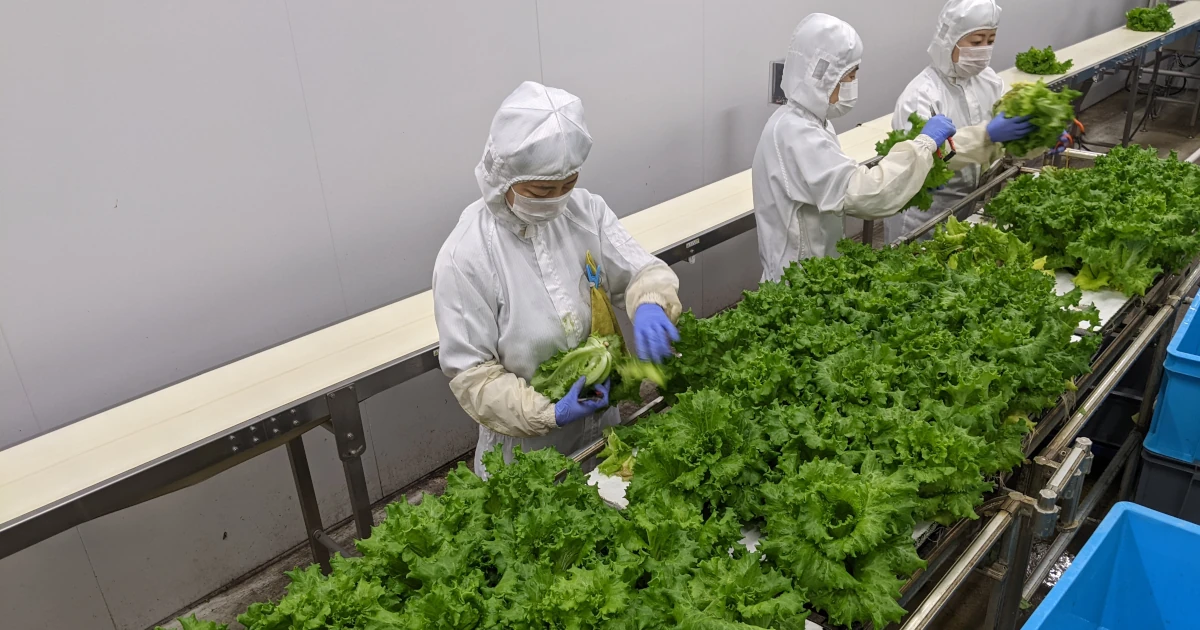
When you try to read that “can it withstand collapse” from a case, you usually hit a wall just short of the numbers. Behind the profit and yield figures spoken of in a success story lie premises that don’t normally surface, and unless you read them while estimating them, you badly misjudge durability. Here I’ll name three representative ones that are hard to see—but these are not all of them.
The first is the composition of subsidies. Is that profit one standing on sales, or a profit on top of having covered some fraction of the initial investment with a subsidy? With this, the resistance to collapse is utterly different. A factory that built its facility with a subsidy shows clean numbers at first. But whether it can cover the equipment renewal ten years out from its own profit is another matter, and that almost never gets told in a success story. The subsidy approval scheme itself is not an area I’ve seen from the inside, so I say this as a read: depending on where the weight of the initial cost gets shifted, how it bites in later years should change considerably.
The second is how much manual labor is put in—that is, staffing density. With the same yield, whether it’s being run with a bare-minimum headcount or with people layered in generously to support quality changes how the profit looks. In the launch period, trouble can pile up on the day of the first harvest, and the president and a few others end up packing for dozens of hours straight, almost without sleep. There are factories where quality is held up by labor close to working for free like that. Is that labor cost riding in the numbers? Or is it held up by the unpaid labor of the president and family, not booked as a labor cost? If it isn’t booked, that profit collapses the moment one person’s effort drops out.
The third is the sales channel’s contract terms. Even when all that’s told is “they take the product,” what about how many years the contract runs, whether there’s a price-revision clause, whether a minimum take volume is guaranteed? If this is close to a verbal one-year-renewal handshake, the condition “sales channel” is far more brittle than it looks. The substance of the contract negotiation is not a part I’ve directly seen on the floor, but precisely because it’s hard to see from outside, it tends to be the premise that most governs durability.
So when you read a case, rather than believing the numbers told at face value, you read while estimating the underside: by what subsidy composition, with how much manual labor riding on it, with a sales channel on what contract terms, does this profit hold together? Only when you go that far does how much it can withstand collapse come into view.
This feeling that “the underside of the numbers is invisible” is backed up from the research side too. The bullish numbers around vertical-farm investment lean for the most part on partial disclosure by private companies, and since the bigger players are the more closed, the numbers visible from outside are pretty unreliable (See: 9, 10). So believing the surface numbers of profit and yield at face value, without estimating the underlying premises, is risky.
That the choice of crop governs how easily things collapse also shows up concretely. What is actually running commercially right now is almost entirely skewed toward crops that don’t keep and command a high unit price—leafy greens, herbs, berries—and these carry only about 6% of the world’s calorie supply. Conversely, try to grow a staple like wheat or corn indoors and, for example, one estimate in Sweden has the electricity bill alone reaching roughly a hundred times the world price of wheat; under current economics it doesn’t hold together (See: 9, 10). So “what to grow” is not a matter of preference; the premise is that the crops on which the books balance are, for now, confined to the narrow window of high-unit-price fresh produce.
Separate the outward form you can read from public information from the substance you fill in by estimate
Subsidy composition and contract terms are exactly the parts you cannot see from public information. What the reader can do is, at most, treat them with “this is an estimate” set apart. Treat an estimate as if it were fact and assert a cause of victory or defeat, and you fall into a different pitfall of your own. The part you can read from public information, and the part that really can’t be filled in without asking the party directly. Let’s sort out how to draw that boundary.
First, what you can read from public information is, so to speak, only the outward form. Where it’s built, roughly what scale, what it grows, which subsidy program it was selected for. This sort of thing appears in municipal open-call results, press releases, and articles in which the company talked about itself. Up to here you may set things down as fact. Of the four from earlier, location and crop, and whether a subsidy “was used,” are fairly visible from the surface.
Conversely, what absolutely can’t be filled in without asking the party is the substance of the composition and the terms. What fraction of the initial investment did the subsidy cover? How many years does the sales-channel contract run, and is there a price-revision clause? Does the president’s or family’s labor ride into that profit as a number? And how deep is the staffing actually running that floor? The underside I raised earlier is almost all on this side. The part of durability you most want to know is structurally outside public information. This is something you’d do well to admit.
On top of that, there are two important ways to draw the line. One is to always handle an estimate with the label “this is an estimate” attached. For instance, “if it was built with a subsidy, equipment renewal should be heavy” is, after all, a conditional hypothesis—not a cause of victory or defeat. The moment you assert it, it turns into the same pitfall as the earlier “a management mistake”: a plausible single phrase that stops your thinking.
The other is that, instead of turning an estimate into an assertion, you leave it in the form of a question. Don’t stop at “I wonder what the subsidy composition was”; leave it as “if I could ask the party just one thing, what would I ask?” Then the estimate isn’t a dangerous conclusion but a list of what to check next. In fact, when you get a chance to go on a tour or talk to the person, whether or not you have that question completely changes what you can draw out.
So this is how you draw the boundary. Read the outward form as fact. Leave the substance with an estimate label attached, in the form of a question. And assert neither. The moment you think you can declare a cause of victory or defeat from public information alone, you’ve already misread the case. Staying that wary is about right.
Up to here this has been about reading the case side, but the same four columns can be drawn for your own side too. Write out your own location, power, sales channels, and crop in the same frame, and line them up one rung at a time against the case’s premises. What bites then is the earlier cut-off line. For instance, if a 20% drop in selling price moves the break-even point by an order of magnitude, can you, at the scale you can realistically reach, meet the price premise of that case? If it’s a case that built its facility with a subsidy, can your own side carry the same renewal burden with your own funds? These two—scale and capital—you know from the start on your own side, even when they don’t appear in the case’s surface numbers. So lining up the case’s premises against your own conditions turns the question from “can I copy it?” into a judgment of applicability: “can I reproduce this premise at my own farm?” And then one more rung remains: “can I run that bundle to the end with my own floor’s people?” Conditions can be checked against documents, but the capability to run them dwells only on the floor.
From the starting state where you went looking for cases thinking “can’t we do it like that company did?”, we’ve come quite a long way. From here, when you see a success story, it will no longer be “can I copy it?” but building four columns to read by—which of location, power, sales channels, and crop are in place, where it stays an estimate, and how the floor that runs it stands. And what remains at the end is the view that both success and failure are just the same bundle of conditions and the frontline capability that runs them, seen from different sides. Keep this one thing on hand and, the next time you face a case, you should be spared consuming it as a story.
If you feel like laying out and inspecting your own four columns and frontline capability properly, just once, I’ve prepared a template that organizes a vertical farm’s profitability and plan on a single sheet. I hope you can use it as a foothold for the plain, unglamorous work of placing the case’s premises and your own conditions in the same frame and comparing them.