Economics and Profitability
Do Closed Plant Factories Pay? Labor Outweighs Power

You may have heard somewhere that a fully closed plant factory does not pay off. And, the other way around, the bold claim that closed is the future. Neither holds up on its own. What separates the verdict is not the method itself, but the conditions the method is placed in: power price, location, the price the buyer pays, and the power of people who keep the operation running. Change the conditions, and the answer for the very same method flips clean over. So there is no single right answer for everyone to “which one pays off in the end.” There is only the answer that is yours alone, the one that comes into view only when you plug in your own numbers.
A method’s edge is not ideology; it swaps with the conditions
A fully closed vertical farm, and the type that uses sunlight. Which one pays off in the end. Many of you are surely stuck right now on this choice of method. The fully closed type is a PFAL that covers all of its light with artificial lighting; the sunlight-using type refers to the greenhouse types that take in sunlight — both the supplemental-lighting hybrid type and the pure-sunlight type. The tricky part is that we are prone to deciding by fairly ideological preference: “closed is newer and better,” or “the Greenhouse must be more natural and lower-cost.”
Because the fully closed type covers all of its light with electricity, the electricity bill inevitably bears down hard. But even for that same closed type, the story shifts suddenly in regions where power is cheap. The Greenhouse, on the other hand, is light on initial cost, but its yield wavers with weather and season, and that instability ends up riding into the price. In other words, “which is better” is not fixed in place; depending on the electricity bill, where you sell, and the people who run it, which one has the advantage flips easily.
So an argument that frames “closed or Greenhouse” as a contest of which type is superior leaves something off. Here let us treat the two not as separate creatures, but as a continuous slider moving along the same axes: power price, location, selling price, and crop. At which mark does the economics flip? That is the question being asked.
Power price and location are first the cut-off for whether you can enter
The first mark to set down is power price. But let me correct one way of putting it here. The economics of a fully closed plant factory is sometimes said to be “all but decided by power price,” yet from my own sense of having worked the floor, that overstates it a little. Power is not the variable that decides the whole of the profit after you start operating. Rather, it works as a cut-off condition for “whether you may enter the fully closed type in this place at all.”
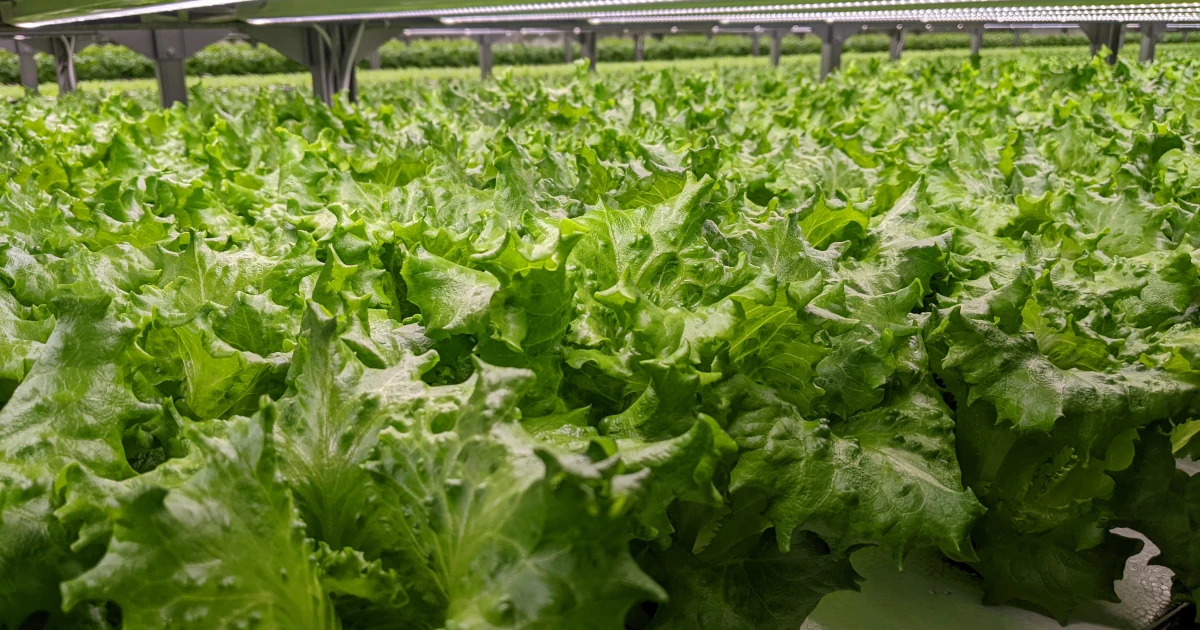
It is true that the electricity bill is heavy within costs. A report studying overseas vertical farms found that power accounts for 20 to 40 percent of production cost, and that 60 to 80 percent or more of that power is consumed by artificial lighting (see 1). The cost of covering all of the light with electricity becomes, just so, a weight. So if you can site it in a region where power is cheap, that alone makes it easier to be in the running. Conversely, run it on the expensive power of an urban area, and however good your yield, the profit is thin. There is no doubt that whether the electricity bill is cheap or expensive bites hard at the point of entry.
But lay one sheet of the domestic reality over this, and the picture changes. According to the Japan Greenhouse Horticulture Association’s fiscal 2025 survey, the largest share in the PFAL cost structure is not electricity but labor, at about 32 to 36 percent. Electricity cost is 24 percent: it has risen from 19 percent in fiscal 2021, but it does not make up half of costs (see 10). The overseas “20 to 40 percent” and this domestic “24 percent” agree on the point that electricity is a heavy cost item. But you cannot go so far as to say “power price all but decides the economics.” In Japan, the largest cost item is people.
So power price is best understood, in a way that fits the floor, not as the governing variable that holds the whole of profit and loss after you start operating, but as the first sieve that judges “whether you can step into the closed type in this location.” The next mark, location, has the same character.
Land with cheap power and places where you can sell high do not overlap
Power and location move separately. In what I have seen, land where power is cheap is usually in regional industrial parks or areas far from where things are consumed. Conversely, the urban fringe, where you can sell at a high unit price, runs up high costs for both power and land. Places where these two coexist comfortably are not many.
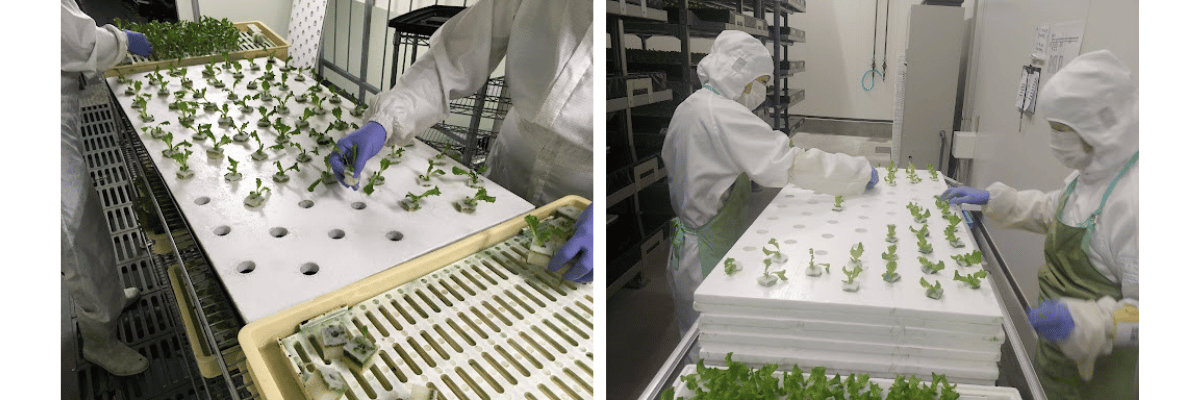
The fully closed type is premised on selling high on the strength of pesticide-free growing and hygiene, but the places where you can sell high are limited. The Greenhouse, on the other hand, can put out volume cheaply. So cheap power alone is not enough. Unless that region also has buyers who will pay a high price, entry for the closed type is not even in the running. Power price and location form one set up to here. They are the cut-off that decides “whether this is a place you may enter.”
What separates profit from loss after you start operating is people, sales channels, and crop management technique
This is the heart of it. After you clear the cut-off for entry, what separates actual profit from loss is not power. It is the retention of people, crop management technique, and your buyers.

The domestic numbers back this up. In the fiscal 2025 survey, about 50 percent of PFAL operators were in the black or at break-even in their most recent accounts. Greenhouse and hybrid types, on the other hand, were over 70 percent each in the black or at break-even (see 10). The PFAL is harder to manage. But within that 50 percent, the difference between factories standing in the black and those sunk in the red is not a difference in power price. In the same power environment, one runs and the other does not.
In my experience, what produces that difference is, first, people. For all the hype about AI and automation, the vertical farm still depends on human hands for many of its steps. Crop management, harvest, and shipment are all, in the end, kept running by the people on the floor. A factory where those people do not stay and crop management technique does not accumulate will not raise its yield, however new the equipment. “The productivity of a vertical farm is decided by people more than by the most advanced system” is something I have seen on the floor again and again.
Next, sales channels. The more a factory has entered from another industry, the more it tends toward a “sell what we made” mindset, and that drags it into price collapse. “Make what sells”: decide first who will buy, at what unit price, and how much, then work backward from there to the items and the cultivation design. Factories that have this in place hold their ground even in the same phase of falling selling prices.
And then scale. The fully closed type has a structure in which turning a profit is hard without a certain scale. Diluting the largest cost item, labor, per unit, and standing up enough revenue to keep on the people who accumulate crop management technique: that takes scale. The survey figure that PFAL average annual revenue is 160 million yen also reflects this “it does not run without scale” structure (see 10).
Power and location judge “whether you can get in”; people, sales channels, and crop management technique decide “whether it runs once you are in.” Seen in these two stages, feet that had stalled on the method debate begin to move.
The economics line moves with the combination of selling price and crop
Among the variables that bite after you start operating, the sensitivity of selling price is high above all. A 20-to-30-percent drop in the selling price can swell the scale needed to break even by tens of times.
There is a study that showed this in extreme form through an estimate. When growing lettuce in a fully closed type, the minimum commercially viable scale is roughly 17 to 38 square meters: surprisingly small. Yet a mere 20 percent drop in the selling price sends that break-even scale leaping at once to 1,700 square meters (see 2). It is a number that shows just how much selling price bites.
That said, this estimate is the result of a single model, and the premises need to be laid out for the reader. The estimate sets a most-advanced-level lettuce yield (higher than the average on the floor in Japan) and a high contract unit price, and it does not assume economies of scale in operating cost. So it is dangerous to apply the figure of “commercial viability at 17 square meters” directly to your own factory. In reality, the earlier sense of scale, a PFAL average revenue of 160 million yen, is closer to the true picture of operations. It is safer to read the estimate as an analogy of sensitivity showing “how much selling price bites,” and to re-derive the absolute value of scale on your own premises.
What bites here is “what to grow.” For a high-value-added, perishable, small-lot crop like leafy greens, the economics line at which the closed type holds up can be small. Being weak in transport, it sits well with the premise of selling high near where things are consumed. Conversely, for crops that compete on volume or for staple grains, today’s closed type mostly does not fit. The fact that commercial use of the closed type is skewed toward leafy greens, herbs, and berries comes from this economic structure as well (see 3, 4).
There is, by the way, a reason for placing power as the first mark. The fully closed PFAL inevitably consumes more energy than conventional agriculture, and at today’s power prices its economic competitiveness is constrained. But if emerging energy technologies hold down consumption, that constraint can be eased on conditions (see 5). For example, according to Barbosa et al. 2015 as cited by one review, growing lettuce hydroponically achieves 11 times the yield and uses one-thirteenth the water compared with conventional growing, while energy consumption swells to 82 times (see 6). This, however, is a contrast with open-field conventional growing, and the figure is for greenhouse-type hydroponics, not a comparison of a fully closed, LED-based PFAL itself. Even so, the direction does not change: where you draw energy from, and at what price, divides the entry point to the economics.
Provisionally judge a method’s odds with four real numbers and the power of people
Provisionally judge which has the advantage with the numbers in hand, not with ideology or mood. To do that, what you write out on paper is, first, four things. Line up power price, location, selling price, and crop in one row from left to right on the paper, and fill in your own actual numbers for each.
Order matters. First is power price. How much you can draw it for per kilowatt-hour: that single number decides whether the closed type is in the running at all. Next, split location into two items, the cheapness of power and the transport distance to where things are consumed, and write them down. This much is the cut-off for “whether this is a place you may enter.” Only here do you put in the selling price, not as a hope but as “the unit price the buyer actually promises you.” Last, sort the crop into small-lot, high-unit-price and perishable, or competing on volume.
Once you have written it, look at sensitivity just once. Write the figure for the selling price dropped by 20 percent beside it, and check how much the break-even scale swells. If it does not fit within a realistic scale, do not choose the closed type under those conditions. Draw the line like that.
But four real numbers alone do not close the provisional judgment. Beyond the cut-off lie three things that do not sit easily on the paper’s numbers: whether people stay, whether you can accumulate crop management technique, and whether you can hold more than one buyer. Being hard to quantify, these tend to get put off, but it is this side that actually separates profit from loss after you start operating. Narrow down “whether this is a place you can get in” with the four real numbers, and ask yourself “whether you can run it once you are in” with these three. The provisional judgment is roughly complete in these two stages.
Do not blame exits and losses on the method itself
So how do other companies’ failures read within this framework? Lately I often see news that overseas closed-type startups have exited one after another. Hearing it, you flinch back: maybe the closed type really is dangerous. But whether that exit was because “the closed method itself is unsound,” or simply because conditions did not mesh, such as siting it where power was expensive or having no buyer, cannot be told apart from a news headline.
As far as the reported substance goes, the exits do not seem to be a verdict on the method itself. Rising power prices, selling prices that did not fetch as much as expected, a capital policy that spread sites all at once on excessive fundraising: many read as having fallen with these factors stacking up. You cannot pin it on the method alone. It makes more sense, rather, to read it as the result of choosing location and buyers for the reason “the closed type is new” without pinning these down.
At home, too, we cannot be optimistic. Even after considerable subsidies went in, there is the reality that around half are in the red. A survey of operators of large-scale protected cultivation and vertical farms reports about 49 percent running in the red, and another commentary reports that even as of 2017, after subsidies on the order of a cumulative 50 billion yen had been poured in, 75 percent were in the red (see 7, 8). But what to watch here is that these do not go so far as to say “the method itself is the cause of the losses.” The sensible way to read it is in the direction that the management model and the design of conditions weigh heavily on the finances; pulling out the numbers alone and slapping a good-or-evil label on the method as “closed = dangerous” goes beyond what the source surveys support. So look at the numbers together with their premises. Looking, one case at a time, at which mark each company that exited missed, power, selling price, or people, is far more useful for the judgment.
Choose the method from a design that can withstand conditions slipping
The view that a method is a continuous slider decided by conditions sits right. But once you have built it, the method itself does not move so easily. After you build the closed type, the power contract changes. The buyer you were counting on drops out. People do not stay, and crop management technique does not accumulate. The conditions, too, can move after the fact. Even if you choose rationally on the slider, the moment you commit, the conditions side starts slipping. That catch remains.
So what I want to recommend is choosing the method at the design stage on a foundation of “the conditions least likely to slip.” For power price, take not a single year’s low but the level of a multi-year long-term contract you can secure. For the sales channel, too, premise multiple buyers rather than depending on one company. For people, prepare a mechanism for retention in advance. Decide the method counting on conditions that move easily, and you collapse the moment they slip.
What is more, the choice of method binds the downstream design of scale, crop, and sales channel. Choose the closed type, and the sales channel leans to high-unit-price, small-volume, the crop narrows to leafy greens and the like, and expanding scale runs into the land constraints of the urban fringe. That is exactly why you decide not on the method alone but looking through to its ripple effects. And when conditions slip, what bites in the end is the design on the resilience side, such as economies of scale and automation.
There is a piece of grounding for this too. The construction cost of the fully closed type has economies of scale, and there is an estimate that a hundredfold increase in scale lowers construction cost per unit by roughly 55 percent (see 2). This is a matter of construction cost, however, with the caveat that it does not bite into operating cost the same way. Furthermore, a study that simulated economic design finds that the scale of the system itself sways profitability more than the technology choice of digital control versus analog (see 9). That scale bites more than the technology choice is supported by this study. Beyond that, “so if you hold scale and automation as design on the resilience side, you can hold your ground even when conditions slip” is my own read from the floor. Rather than betting on the single point of method, keep thick the margin that remains when things slip. The honest sense I have is that factories with that kind of design are more often the ones that keep running for a long time.
In the end, do not make it an either/or of ideology between the fully closed type and the sunlight-using type. Look separately at power price and location as the cut-off for entry, and at people, sales channels, and crop management technique as the profit or loss after you start operating. Then line up your own actual numbers, look all the way through to the sensitivity check to reach a provisional judgment, and see ahead to the design of scale and sales channels beyond it. Think in that order, and feet that had stalled on the method debate should begin to move toward choosing by the economics conditions.