Crops
Vertical Farm Taste: Stop Feeding to Cut Bitterness, Keep Yield
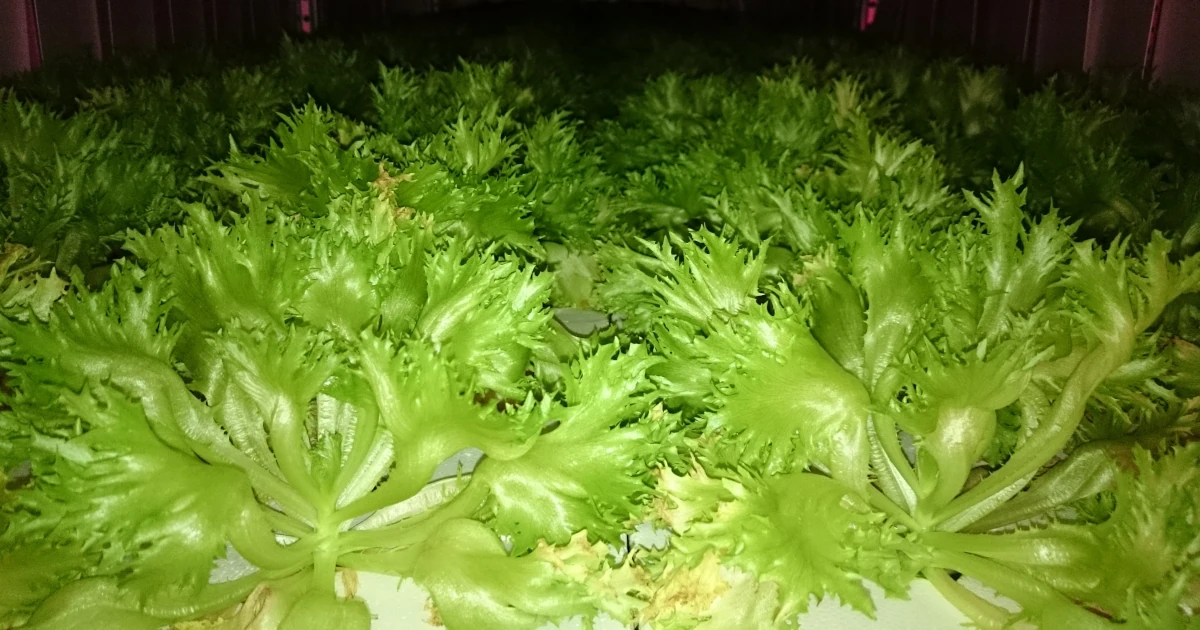
Say “vertical farm” and the conversation turns first to price. Do you push it into high-end restaurants at a premium, or will it get tagged as “lower quality” on the mass retailer shelf? That call is usually dragged along by a single image: the idea that indoor produce tastes worse. But whether flavor is a fixed value set by facility type, or a variable you can move through design and operation, completely changes the business plan you should be building.
The real cause of “watery” is not the method but the absence of an aim
“Factory produce is watery.” “No bite, nothing to it.” These verdicts follow indoor-grown produce around. And they usually get pinned on the facility type. But the more you actually grow and sell on the ground, the more you know it is not that simple.
Flavor shifts a great deal with the time since harvest. Even the same plant differs in sweetness between a morning and an evening picking. How you manage it right before shipment changes how much bitterness comes through. So when someone says “factory produce is watery,” the claim snags on a question: is this about the method, or about the operation? Even the same lettuce becomes a different thing between “the batch grown sweet” and “the batch built for aroma.”
It is genuinely true that flavor moves with the time after harvest and the management right before it. The same plant becomes a different thing, again and again. But once you push on that, the “method or operation” split itself starts to come undone. The facility type itself does produce flavor differences, true. But within the same method, the range operation can move it across is also wide. People often say it lands watery when left to itself, but by how you throttle light and feed, and how much stress you put on it before harvest, you can move it quite a lot. So when someone calls it “watery,” the first thing to check is not the method. It is what that batch was grown to aim for. Aim for sweetness and bitterness recedes; aim for aroma and some bitterness stays. Produce grown without a decided aim usually lands on “a flat, featureless taste.” What people call watery factory produce is really not about the method, but about the absence of an aim.
That bitterness moves with last-minute management shows up clearly in the numbers, too. With hydroponic lettuce, simply stopping the nutrient feed 2 to 4 days before harvest lowers the leaf nitrate that drives bitterness by an average of 29 to 58 percent (see 1). And under good conditions, yield barely drops over that window. We tend to brace for “shift the flavor, sacrifice the volume,” but with bitterness there is real room to draw it down while holding volume. So for leafy greens and PFAL, what you do in the few days before harvest is a clear, legible lever for moving flavor. That said, even the same feed stop did not work for the fall crop in the original paper - the growing conditions were doing more of the work. It is not an all-purpose move that works every time. Throttle nitrogen too hard and you pay on the other side, with paler leaf color and pigment. Even so, used with the working window and the sacrifice understood, it is a window of a few days you can straightforwardly act on.
Sweetness, bitterness, and aroma move on separate dials
When do you “decide the aim”? Do you decide “this time, sweetness” before you even sow the seed and build the whole process around it? Or can you steer toward it partway through as you watch it grow?
You do not have to lock it in. Before sowing, set the rough frame: “this time, sweetness.” But that is not to bind the whole process - it is to decide which way to lean when you are unsure. There is plenty of room left to steer toward it in the back half as you watch it grow.
And narrowing down is not giving up. Decide the aim and that axis is set, and the other elements ride along more easily. In a batch where you have decided to push sweetness, for example, the pre-harvest management tightens, so aroma also stays better than before. Conversely, a batch aimed at “a bit of everything” comes out flat not because you got greedy but because, with no axis, every step swings halfway. That is exactly why you commit to one axis. Around the axis you have set up, the second and third elements follow on their own.
So why does separating the aim matter? Because the flavor elements each peak under a different condition. The thing I can state most firmly for leafy greens is one axis: sweetness (sugar) and bitterness (nitrate) peak under different conditions. In lettuce, setting the red-light ratio around 80 percent minimizes bitterness (nitrate), but the condition where sugar and vitamin C ride highest sits a little off from that (see 5). In the world of fruit-vegetables, the same structure is visible in the numbers. In tomato, working salinity into the nutrient solution raises soluble solids and vitamin C, lifting fruit quality (see 2). And the EC where yield peaks and the EC where quality peaks sit at different points - true for tomato, and the same for peppers (see 3, 4). These are fruit-vegetable examples, but the structure - different elements peaking under different conditions - should hold for leafy greens too. In other words, “the setting that maximizes volume” and “the setting that maximizes sweetness” are different positions on the same dial. So unless you decide up front which of sweetness, bitterness, or aroma you will take, every dial stops at a noncommittal position. That is what “no axis, comes out flat” really means.
Decide your strength on one axis, then choose the buyer
What do you make the axis? In the end, it changes with who you sell to. Supplying a high-end restaurant and lining a mass retailer shelf demand “deliciousness” pointed in different directions. Do you choose sweetness because the grower prefers it, or lean to aroma because the buyer wants aroma? On the ground, how are flavor and buyer tied together?
Here, have you ever felt this worry? If you keep switching between leaning sweet and leaning aroma order by order, won’t the very flavor your facility puts out best end up wobbling instead? Wouldn’t it make more sense to have one thing - “for aroma, nobody beats us” - and go looking for buyers who want it? Going to match the buyer, versus sharpening your own strength and choosing the buyer: which comes first?
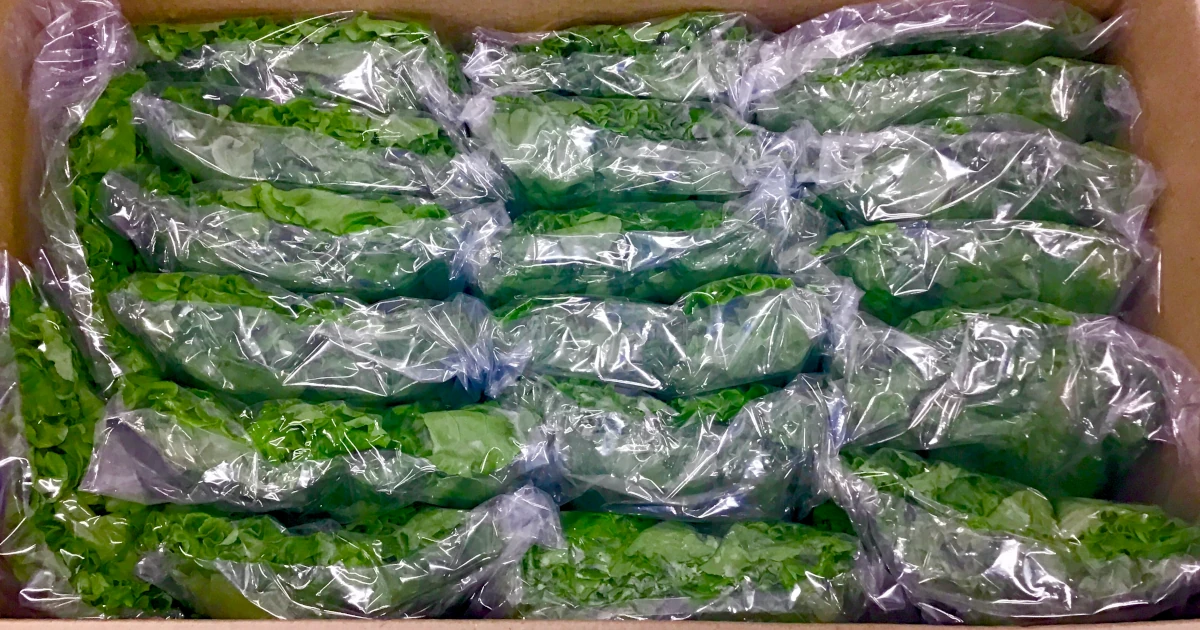
That worry is right. Switching flavor order by order looks like fine-grained service, but it is actually the approach that cuts reproducibility the most. The moves that shift flavor have a surprisingly narrow window where they work. Some only work a few days before harvest, and pushed too hard they wreck leaf color or shelf life. So if you keep swinging for a different aim every time, you get hits and misses and easily become “they’re sometimes amazing but never steady.”
In order, deciding your strength on one axis and then going to find the buyer who wants it usually lasts longer. Once you decide to attack with aroma, you repeat that move and stabilize it, and pair up with a buyer who values aroma. Going to match the buyer every time is the advanced move that comes once that one axis is set. Try to be clever from the start and it usually all comes out halfway.
The link between buyer and flavor element is roughly visible, too. On the mass retailer shelf, price and “can I choose it with confidence” are nearly dominant, and a slight difference in sweetness or bitterness is hard to price in - this lines up with consumer surveys reporting that price and reassurance are what decide the purchase (see 7). Conversely, the more the buyer puts a face to the grower - like high-end restaurants or direct sales - the easier it is to get a single sharp quality such as aroma or freshness valued - this is not something I can back with numbers, it is my gut feeling. So “which flavor element turns into price” already narrows down a great deal once you have decided the buyer, the way I see it.
“Pushed too hard, it wrecks shelf life” is something actually observed. Grow lettuce with far-red light added and the functional compounds at harvest - phenolics, flavonoids, carotenoids - drop. And if storage-temperature management is loose, it spoils faster as a result and visual quality falls too (see 6). Moves that attack flavor or nutrient content in one direction usually end up in a tug-of-war with another metric like shelf life or appearance. So it is not “the harder you push, the better”; you hold the working window together with what you are sacrificing at that moment. The more a move chases a price premium, the more it always comes bundled with added cost like supplemental lighting and labor, and with the work of managing swings in reproducibility and shelf life.
What rides on price is not flavor but the consistency of the aim
One business point here too. You invest, thinking “polish the flavor and it sells at a premium” - a common story. But in practice, pricing is what decides the purchase. And inside that same customer, the feeling that “factory produce makes me nervous about flavor” still lingers. The flavor you raised does not necessarily ride straight onto price.
And one more thing worth confirming as a grower. Does a deliberate move always shift flavor? Or are there crops and metrics where no amount of swinging brings out a flavor difference?
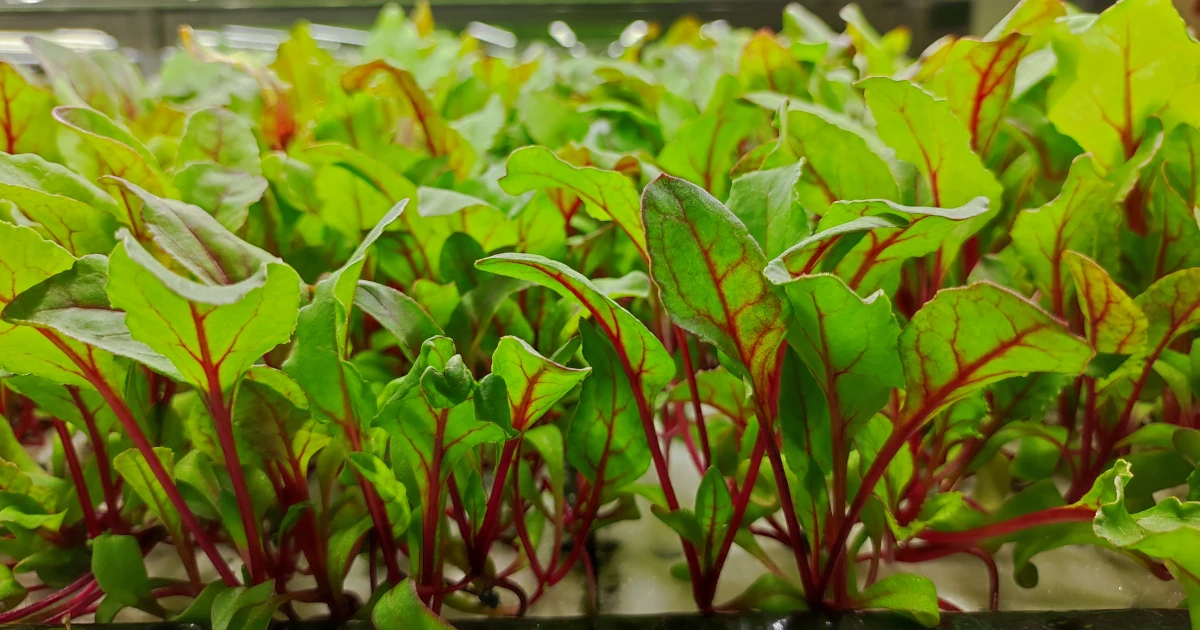
Does aiming always move it? No - it does not work that way. What works well is sweetness and bitterness in leafy greens, and there you can swing straightforwardly with pre-harvest management. Aroma, on the other hand, tends to top out at the ceiling the variety holds - that is my hands-on sense from growing leafy greens. No matter how tightly you run the operation, a variety that does not smell of much to begin with is hard to make fragrant. By metric, sugar content is easy to move but tends to fight with texture and shelf life, and the harder you attack sweetness, the more it tends to come out watery - that is my impression. So you separate “the axis that moves” from “the fixed givens” at the very start. The fixed givens - the nature of the variety and that facility - you first accept as the ceiling on flavor. On top of that, you attack the moving range with operation.
The business story overlaps here. Flavor itself is hard to price because buyers cannot measure the flavor difference. But the consistency of the aim - deciding “this facility is aroma” and putting it out steadily every time - can ride onto price as steady supply and brand. So what you sell is not the flavor itself but the unwavering aim. What earns the premium is not the skillful batch but the unwavering batch.
That flavor itself is hard to tie directly to price is backed up from the consumer-survey side too. There are several reports that for vertical farm vegetables price is what decides purchase intent, and in the same surveys over 60 percent of respondents held some concern (see 7). Japan has reports of the same tendency, noting that while nutritional value pushes the willingness to buy, unease about freshness remains as a wall to acceptance (see 8). In other words, buyers look at “can I choose it with confidence” alongside price, more than the flavor itself. So it is hard to straightforwardly put the flavor you polished onto the price. That said, the more a segment has high income or involvement, or values organic and brand, the more it tends to pay willingly, and there the consistency of the aim rides onto price more easily. It depends on which market you face (see 7, 9).
It is also worth holding in mind that there are crops and metrics that do not move even when you aim at them. There are reports that changing planting density or number of bunches in tomato, or changing nutrient solution management in cucumber, barely moved the basic fruit-quality metrics (soluble solids and acidity) (see 10, 11). These are fruit-vegetable examples, but the structure - a move does not always shift flavor - is worth keeping in mind for leafy greens too. There is also a comparison where the phenolic content of hydroponically grown lettuce did not change even under a different, also solution-based growing method (aquaponics) (see 12, 13). It is not that “soilless means nutrition or flavor drops.” Nor, in turn, does “a move always shifts it.” Bet your price on a metric that does not move and the effort ends unrewarded.
The first step is not a move but knowing the nature of your own variety and facility
As you go to decide your crop, what should you do first? Before you suddenly start fiddling with light and nutrients, there is one step worth nailing down.
Before you decide which of sweetness, bitterness, or aroma to aim for, first know what your variety and that facility “can put out and cannot put out.” Fiddling with light and nutrients comes after you know what your variety and facility can and cannot put out.
What to do is simple. For the first few crops, do not swing for any aim - grow plainly under the same conditions and eat it as it is. Then the nature comes into view: “this variety just does not smell of much,” “sweetness rides on straightforwardly.” That becomes your fixed given. But this is not about stopping shipment to run experiments. In parallel with your usual shipment, you just taste that batch of vegetables plain. If you are going to try a move like stopping the nutrient feed only before harvest, a facility sharing a nutrient reservoir also needs the zoning groundwork - whether you can split off the section you stop from the section you do not.
Skip that and jump straight into moves, and you will spend forever swinging at air, trying to use operation to draw out a flavor the variety does not hold. The first step is not making a move but correctly knowing the nature of your own variety and facility. Only once you know which axis can move can you choose where to commit to one axis. And only then can you answer the one line “factory produce is watery” with: it is not the method’s fault, it is a question of aim. Do not reverse the order. That is the shortest path of all.