Economics and Profitability
Food Deserts and Indoor Farming: Greens Yes, Staples No
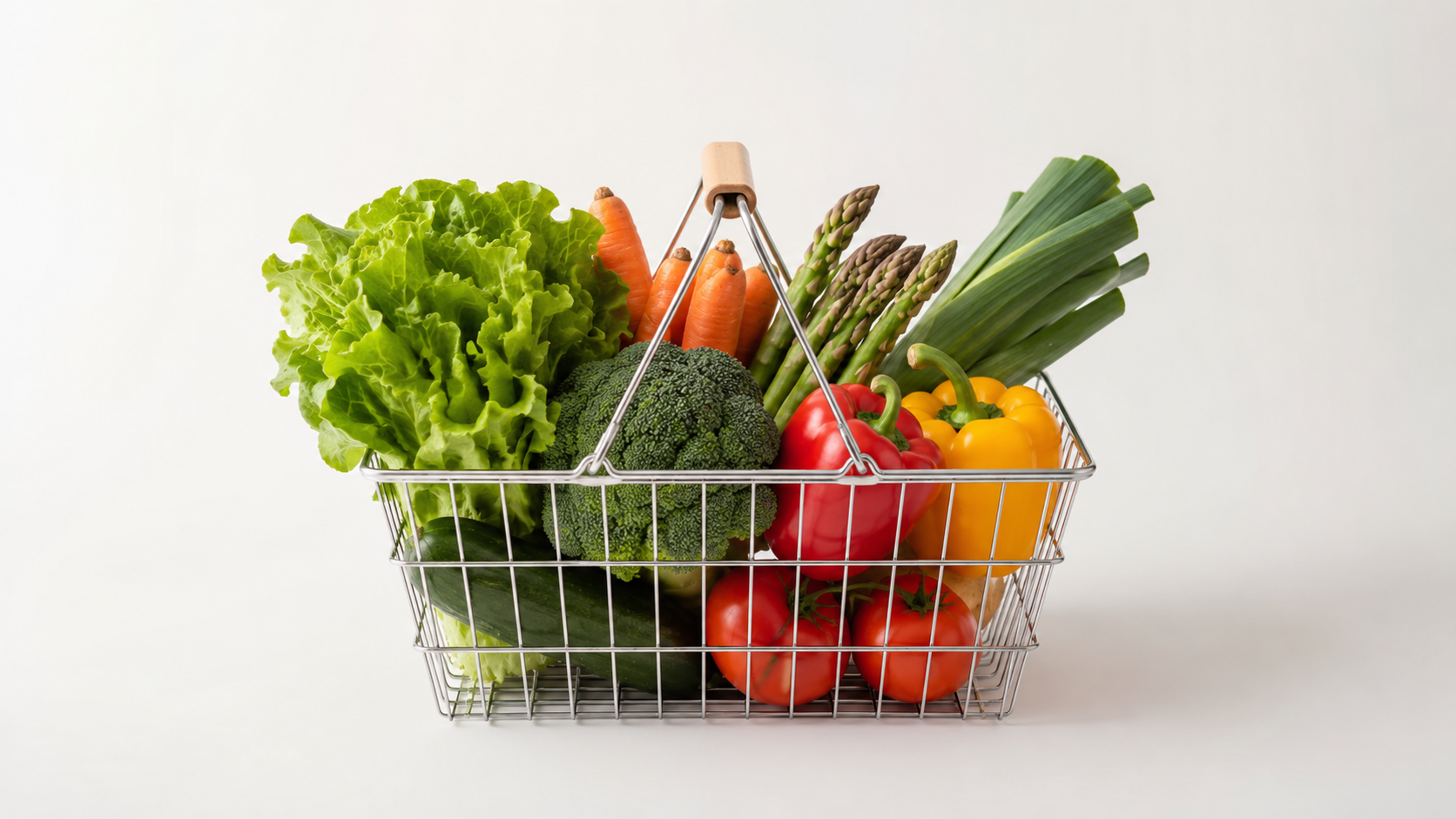
Saving depopulated areas and remote islands where fresh food is hard to buy, the so-called food deserts, with an indoor farm. This pairing looks great on a proposal’s cover page. A social problem and advanced technology, lined up on a single sheet, and whoever you show it to comes back with, “Nice story.” But when you set the farms that lasted next to the farms that shut down as cases, the fork in the road turned out not to be the size of the mission. On the side that lasted, the price residents could pay, the distance it had to be hauled, and the years of subsidy left happened to line up at once.
The places I have walked myself are PFAL leafy-green farms; I have not seen overseas urban agriculture on the ground for myself. So from here on, I write this as the thread that comes into view when I, with the eye of someone who has stared profitability down at a PFAL, set the papers and the cases side by side and read them.
The Size of the Mission Does Not Move the Business
You build an indoor farm in a depopulated area or on a remote island. It is a place where fresh food is hard to buy, so building one is meaningful. At first you think that, plainly. But as you line up the cases, what divides the ones that go through from the ones that do not does not look like the size of the mission. The price residents can actually pay, the distance to haul, how many years of subsidy are left. Whether those plain conditions line up. And the awkward part is that the more meaningful the project, the harsher those conditions tend to be where it sits.
I do not think this is overthinking it. Mission does not easily become the force that moves a project. The places where the mission is large are usually losing population, low in income, and dependent on subsidies. In other words, “the degree of hardship” and “the conditions for the business to work” structurally tend to point opposite ways. So the higher the mission, the harsher the conditions tend to get. This is less a law than a tilt I feel when I line the cases up.
Those plain conditions look like separate matters but are actually connected. If subsidy lasts two more years, then unless within those two years you can see all the way to “will residents keep buying even at the no-subsidy price,” it ends up stopping partway. Mission can be the reason at the entrance, but whether it lasts has to be judged on a different yardstick. In this article I bundle the conditions that get overlooked into three: the price people can pay, the distance to haul, and the years of subsidy left. This is not an exhaustive list of governing factors; it is the angle I keep at hand when I put a proposal together. The factors that move profitability itself break down more finely into labor cost, electricity, sales scale and so on, as we will see later.
The foundation of this view lies in the discussion of North American urban agriculture. There, the case is made that you cannot pull off three things at once without outside funding: “deliver cheap food to low-income people,” “serve as a job-training site,” and “have producers earn a proper living” (see 1). A survey in the same line also reports that roughly two-thirds of urban farms had annual sales under 10,000 dollars (see 2). The shape is this: there may be mission, but make it carry everything on its own and the economics break. Further, there is the point that rooftop and vertical farms in New York and Chicago tend to cluster in middle-income districts rather than low-income ones, and that urban agriculture in developed countries leans, from the start, toward improving food quality and toward social and educational aims rather than supplying basic food to low-income people (see 7). The place where “it reaches the people in need” does not seem to fill in by itself if left alone. I should note in advance that what I cite here is overseas knowledge that includes soil-based urban agriculture, and it sits on a different layer from the PFAL electricity-and-crops discussion I touch on later.
Choose the Site by Profitability First, Not by Degree of Hardship
If you go in on the premise that the subsidy runs out, it starts to look right to choose, from the start, a place that works even without subsidy. But then it also starts to feel like the areas in the most trouble keep getting pushed to the back. When someone actually runs a business like this, which do they look at first to choose the site: that “degree of hardship,” or “does it work without subsidy”? Have you ever wondered?
In my view, what you should look at first is “does it work without subsidy.” The degree of hardship can be a reason to choose a project, but it is hard to use as a yardstick for narrowing down the site. If anything the order is reversed: first make candidates of the places that meet the line where residents can keep buying even without subsidy, then among those pick the one in the most trouble. Choose by degree of hardship and then bolt profitability on afterward, and it usually stops partway. That, too, is what I expect, from the experience of staring profitability down at a PFAL.
That said, the catch that the areas in the most trouble get pushed to the back is exactly right, and that part is not filled by the business yardstick alone. So there is a move where you split it into two tracks. Set up the main body in a place that works without subsidy, accumulate profit and operating know-how there, and then spread thinly, on a different budget, into the areas where profitability is tough: government, donations, the public budget. Do not force “the place that works” and “the place you want to reach” to match on the same profitability. Look at profitability first, but keep the degree of hardship without throwing it away, held on a separate route. That is the design.
This order of “look at profitability first” overlaps with how the research is laid out too. The commercial urban agriculture business model is a different animal from the rural type, and unless you swing it toward one of differentiation, diversification, or low-cost specialization, it does not last — that is the argument, with caveats. Moreover, many projects are propped up by outside grants or unpaid and volunteer labor, and profitability and fundraising come up repeatedly as shared management problems (see 3, 4). “The shape in which a business turns a profit” seems to be quite limited. Financial-model estimates also hold that what moves profitability is labor cost, electricity price, and sales scale. A desk estimate targeting lettuce holds that when skilled-labor wages exceed 19 dollars an hour and unit counts are low, profitability collapses, while conversely, if you widen the scale and secure the selling price, it moves to the black side (see 5). “Whether it works” is decided not by location or sentiment but by the combination of these few factors. That is the framing.
Split the Price into Two Tiers by Who Buys at What Price
Indoor-farm vegetables inevitably come out pricey. So a reversal happens: the very people you most want to reach, who are low-income and find fresh produce hard to buy, are the ones who cannot afford it at that price. So who, at what price, keeps buying?

This reversal probably cannot be solved by “sell cheap to everyone.” You cannot really make the premise that the lowest-income tier keeps buying indoor-farm vegetables at list price. So who buys? My design idea is to place the tier that supports the price first on the middle class. People who can pay a little more for value like freshness, local origin, and pesticide-free. That supports the main body of the list price. On top of that, to the low-income people you most want to reach, you deliver the same vegetables at a different price. Food stamps, institutional catering, food banks, local in-kind support: in other words, you put it on a mechanism that separates “the person who buys” from “the person who pays”. Try to make the list price hold on the buyer’s wallet alone and it usually fails to reach the people you want. So “at what price will they keep buying” is not one number; you design it split into two tiers: the line where the middle class supports the list price, and the line where it reaches low-income people with support folded in. Unless you build it so both tiers can be drawn, pricey vegetables do not circulate well. That is my current read. I have not myself confirmed a case where two tiers actually worked, so I leave this as a design proposal, not as empirical proof.
That the height of the price greatly sways buy-or-not is shown in consumer surveys too. For vertical farm vegetables, price is raised as a decisive factor swaying purchase intent (see 6). “The price stops your hand” seems to be a wall you cannot overlook. And, as I touched on earlier, it is also pointed out that the siting of rooftop and vertical farms in New York and Chicago tends to cluster in middle-income districts rather than low-income ones (see 7). Left alone, it drifts physically away from the very tier you most want to reach. So I think of the “separate the buyer from the payer” design as a contrivance to deliberately push back against that natural tilt.
The Fresh Produce an Indoor Farm Can Solve and the Staples It Cannot
What can you even grow in an indoor farm in the first place? You often hear about leafy greens like lettuce and herbs. But what the people genuinely struggling to buy fresh food need is not leafy greens so much as staples and long-keeping vegetables like rice, potatoes, and onions. Is there not a gap between what can be grown and what the area genuinely needs?
Here it is clear-cut. Blur it and the story gets too pretty. On the premise of a closed-type PFAL, what an indoor farm can bring into the black is basically leafy greens and herbs, and at most tomatoes or strawberries. Things that are short, light, quick to harvest, and whose freshness becomes the price. Conversely, staples and long-keeping vegetables like rice, wheat, potatoes, and onions almost never pencil out indoors. Growing them cheaply and in bulk on wide land with sunlight is by far the strongest, and spending on electricity to grow them indoors does not justify the cost. On price per calorie, you cannot beat the open field.
So you cannot say “solve a depopulated area’s or remote island’s whole food situation with an indoor farm.” Here it is better to look at it split apart. What an indoor farm can solve is the “quality” part of fresh produce: the hole where fresh leafy greens do not reach the area at all. What it cannot solve is the calorie-and-staple part. That is, either way, a matter of hauling it in from outside or supporting it by other means. An indoor farm is “a part that fills one corner of fresh produce,” not a device that carries the whole of an area’s food.
Several reviews make the same split too. What stands up commercially on vertical farms and closed-environment farms centers on leafy greens, herbs, and microgreens; the indoor production of staple grains like rice, wheat, and corn, which supply roughly 60% of the world’s food energy, is not at present economically viable (see 8). Advantages like cutting water use by up to 99% compared with conventional cultivation also work only for specific crops such as leafy greens and cannot be generalized to staples (see 8). The weight of the electricity bill is concrete too: at a PFAL vertical farm, electricity makes up 20 to 40% of production cost, and artificial lighting accounts for 60 to 85% of that power consumption (see 9). Where the open field gets by for free on sunlight, the PFAL is buying it with electricity. That is why making staples beat the open field on price per calorie is structurally difficult.
What Remains After the Transplanting of Overseas Cases and the Subsidy
The cases brought up in talk like this are, I think, often food deserts in US cities. There is a thick middle class, and the support frameworks exist too. Some of you may have wondered the same thing: is it fine to apply that straight to Japan’s depopulated areas and remote islands? Or, do the facilities built with subsidies really keep going after the subsidy runs out? You hear about it up to the point of building, but somehow what comes after does not come into view.
Let me set the footing in order here. The US urban-agriculture literature I have been citing is a source for showing general principles of profitability: “mission alone does not make profitability hold up,” “the pricey product is hard to reach,” “staples do not fit indoors.” How that plays out in Japan’s depopulated areas and remote islands, on the other hand, is a blank where there is almost no primary material I have directly examined, an object you can only reason about by applying the principles. So as not to mix the two, from here on I proceed conscious of “how far is a transferable principle, and from where is it a blank specific to Japan.”
The US urban cases rest on quite different premises. That is a food desert inside a city, and drive fifteen minutes and there is a town where the middle class lives. Food-support systems like food stamps are rooted in as well. So the two tiers of “the middle class supports the list price, and low-income people receive it with support folded in” are easy to draw in the first place. Japan’s depopulated areas and remote islands, on the other hand, are thin in population density, and neither the thickness of the middle class nor the support framework is as great as in cities. On top of that the haul distance is long. An indoor farm’s inherent strength is that the production site is nearby and logistics cost can be held down, but in a depopulated area or on a remote island that distance stretches, and that very strength gets baked into the price instead. The same two tiers become harder to draw. So you cannot do the transplanting as is; it becomes a matter of rebuilding from the premises.
What happens after it is built with subsidy. To be honest, plenty of Japanese vertical farms do not hold up as a business even with subsidy and run in the red. Unless you see it through past the point the subsidy runs out, what became of it afterward stays truly out of view.
And this shows in Japan’s numbers too. A national survey holds that despite over 50 billion yen of subsidies being poured in, about 56% of PFAL operations were in the red, and only about 20% were in the black (as of 2017; see 10). Most of the rest break even, with the picture being that about 80% do not reach the black. In the same year, there was also a commentator who wrote in a trade magazine that “even with 50 billion yen in subsidies, 75% are in the red” (see 11). It is natural to read this 75% as a number that bundles the red together with break-even, and it is probably the same scene the national survey shows, “about 80% not reaching the black,” said from a different angle. Either way, what is at work here is the difference in type. The red is heavy at PFAL (closed-type LED); for a Greenhouse or hybrid type, being able to use solar radiation changes the electricity equation accordingly. A separate public survey (the Ministry of Agriculture, Forestry and Fisheries’ status survey of protected cultivation and vertical farms) holds that Greenhouse and hybrid types have, in recent years, stayed out of the red at around 70%. That “building” and “lasting” are separate problems shows in these numbers quite starkly.
There is also research that looks carefully at how the subsidy itself works. It is a pre-peer-review preprint, but it lays out that smart-agriculture subsidies do have “additionality” that moves farmers who would not have adopted otherwise, while at the same time there exists “deadweight (money spent where it changes nothing)” of also handing them out to farmers who would have installed at their own expense even without subsidy (see 12). A subsidy is not an all-purpose switch; it is a tool whose effect changes greatly depending on whom you narrow it to. It becomes a matter of looking not only at the years of subsidy left but at whether that subsidy is hitting the people it truly works on.
Set Mission and Profitability Side by Side as Separate Numbers
Finally, let me narrow down to one thing the whole piece has run through. Whether an indoor farm lasts in a depopulated area or on a remote island comes into view not from “the higher the mission, the more it gets approved,” but from whether the price residents can pay, the distance to haul, and the years of subsidy left line up. At least, that is the angle from which I read a proposal. This is not a logic for stopping a business; it is a matter of the order in which you put a proposal together. Set the social-mission page and the profitability-conditions page side by side as separate pages, and build the numbers on the premise that the profitability-conditions side does not fill in automatically on the social-mission side. Mission you may write with confidence as the reason at the entrance. But next to it, place as separate numbers who buys at what price, where and how much you haul, and how many years of subsidy are left. And what I want you to remember is this: an indoor farm is, after all, “a part that fills one corner of fresh produce,” not a device that solves the whole food situation of a depopulated area or remote island. Whether you can write that part honestly becomes the fork between the proposal that lasts and the proposal that stops.