Farm Operations Management
NFT vs DFT Hydroponics: Yield Isn't Set by the System
Articles for Farm Operations Managers
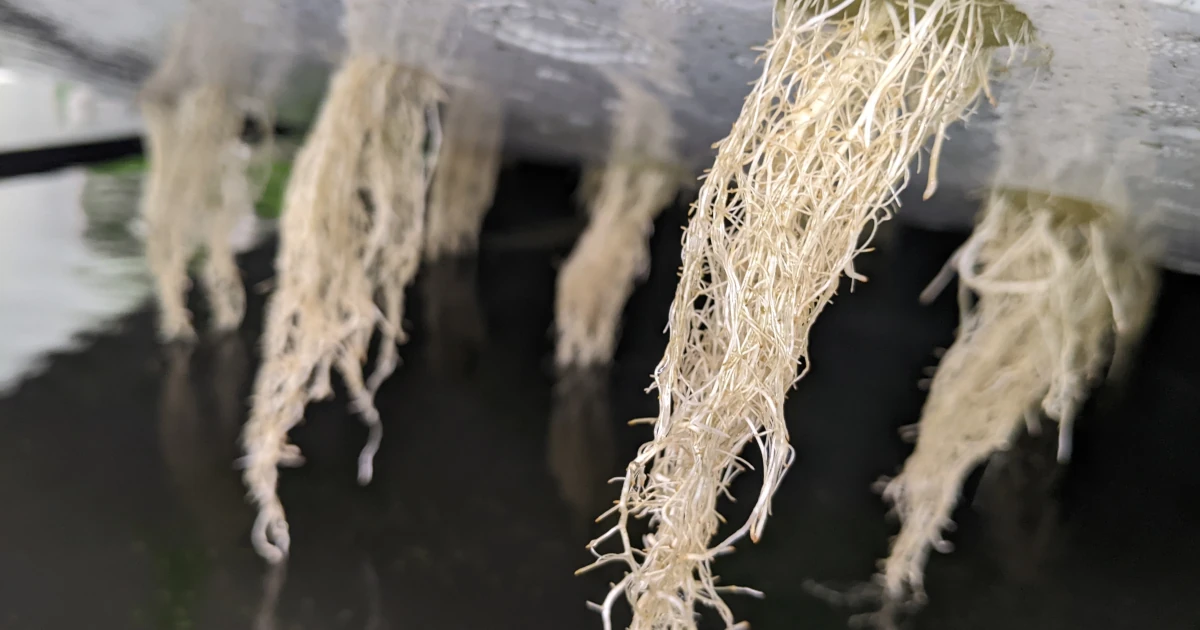
The method’s superiority does not decide your yield
When the conversation turns to building a nutrient solution system from scratch, or rebuilding one, the first thing you usually run into is “NFT or DFT?” Run it thin, or pool it deep. Search around and you find endless comparison tables, each side has a point, and you end up less able to decide than before — that kind of stalling, dragging on for days. Does that sound familiar?
The more you look into it, the more it feels like there is no deciding factor. You hear that NFT resists root rot because the water keeps moving, and you think, well, NFT then. But then you read that DFT, with all its water, holds up better against power outages and equipment failure and buys you time when something goes wrong, and you swing back to thinking that for mass-producing leafy greens that one is the safer bet after all. Look at a comparison table and each row has a circle on one side or the other, and when you total it up it comes out roughly even. And maybe it is not that you have under-researched it, but that it was built to come out even in the first place — have you ever felt that? That if either choice comes down to how you manage the water afterward anyway, then what is all this time you are pouring into the very first fork?
In fact, once you have seen a number of these floors, that view — “it is built to come out even” — is the right one. That comparison table only lines up the properties of each method; the variables that decide yield on the floor are not in it. After years of watching lettuce, when I trace back the cause whenever yield or quality wobbled, almost every time it was not “the method” but one of “that day’s flow rate, nutrient solution temperature, or dissolved oxygen.” Root rot in NFT is not the method’s fault; it is when the flow drops, the film breaks, and the tips of the roots dry out. Plants stretching and going leggy in DFT is not the method’s fault either; it is when the nutrient solution temperature rises, dissolved oxygen escapes, and the roots weaken. Whichever you choose, it comes down to whether you watch that spot every day. So of course the comparison table totals out even, and trying to declare a winner there means you are asking the wrong question.
So how do you decide the method? This part you can keep quite simple. It is decided by the constraints in front of you. How many minutes do you want to ride out a power outage or a failure — if you want water volume as the insurance premium for that, lean DFT. If you want to add more shelf tiers and build light, and keep the plumbing simple, lean NFT. Within the range of your scale and the width of risk you can tolerate, it decides itself almost automatically. It is not a fork worth agonizing over for days.
What deserves your time and effort, rather, is what comes after you choose. The thing that matters in common across both methods is a way to notice when it stops. A pump has stopped, the nutrient solution temperature has risen — how do you catch that during the hours when no one is standing in front of the shelf? NFT’s flow is its lifeline, so when it stops it goes fast; DFT, having water volume, gives you a little grace even if you are slow to notice — there is that difference, but either way the biggest loss is “noticing too late, too late to fix.” So rather than spending your hesitation on which method is better, settle first the question: “with either method, how many minutes will it take me to notice that it has stopped?” Once that is settled, the choice of method becomes a small choice hanging below it, and it falls into place smoothly.
“Built to come out even” holds up in the studies that have compared them, too. Growing leafy greens such as lettuce under NFT versus DWC (deep-water culture) — a standing-water relative of DFT — and comparing growth and yield, there is a report that no large difference appeared between the two and both reached the weight for harvest at the right timing. That methods alone make little difference is borne out not only by what you feel on the floor but by the comparison trials as well. (see 1)
What pulls the method is the time you can tolerate and the scale
When you build a nutrient solution system from scratch, or rebuild one, yield is not decided by the method’s superiority itself — that is what I have been saying up to here. So where does the difference come from? The question I left at the end of the previous section — “how many minutes will it take to notice that it has stopped?” — is what I dig into from here.

Pose this question and one doubt surfaces right away: that “how many minutes” is, in the end, something you back-calculate from the method, isn’t it? With NFT it dries fast when it stops, so you have to build your monitoring on the premise of a short tolerable time. With DFT the water volume gives you grace, so it can be a little looser. If that is so, then while you say you settle “how many minutes to notice” first, the strictness required actually changes with the method. Can you really settle “how many minutes I can tolerate” before choosing the method? Or does the tolerable time come first, and from it lean-DFT or lean-NFT decides itself naturally?
The order is clear. The tolerable time comes first. You do not back-calculate it from the method. The tolerable time is decided not by the method but by the circumstances of the floor. How many hours at night or early morning no one is standing there; how many minutes it takes for someone to reach the shelf after the anomaly is noticed; how many seedlings do you lose in a stopped shelf, and how much money is that loss. These are numbers that have been on that floor from the start, long before you choose a method. In a PFAL closed room, on the premise that room temperature is roughly constant year-round, what matters on the side of stop-risk is almost entirely this “the time no one is present, and the time to reach the spot.” Of course in reality, concrete circumstances like the weight of water the floor can bear and its estimate, or equipment already installed, also pull the method. But those, too, are not answers you get by glaring at a comparison table; they are, again, numbers that have been on your floor from the start.
Once that “tolerable time” is settled, the method is narrowed not by back-calculation but as a necessary condition. For example, on a floor that runs unattended for four hours at night and takes thirty minutes to reach, you will not catch it in time — not at the speed where, the instant the flow stops in NFT, the film breaks and the tips dry out. So it is not that if you choose NFT you tighten your monitoring; it is that it becomes hard to choose in the first place. Conversely, if you can buy that grace with water volume, you lean DFT. The method does not decide the strictness of monitoring; the tolerance time that comes first pulls the method and its water volume along together. So there is no contradiction. “How many minutes I can tolerate” is settled on the floor first, independent of the method, and the method is no more than one means of meeting that time. It is a question of allocation: buy time with water volume, or buy it with monitoring and a reach-the-spot setup. And in fact, even if you choose DFT, the grace is an illusion if you are not watching dissolved oxygen, and even with NFT, if you have a setup that tells you the instant it stops, the speed is nothing to fear. In the end, again, it comes back to how you run it after choosing. So the good order is to write the tolerable time on paper first, and hang the method below it.
There is one more circumstance in front of you that pulls the method straightforwardly: scale, and how far you do things by machine. While you run small and by hand, NFT’s lightness and simple plumbing fit; but as scale rises and you mechanize final planting, transport, and harvest, the standing-water style, which you can handle by moving whole cultivation panels, starts to fit better. That said, this is not “because the scale is large, it is decided as DFT.” What actually matters is not the method itself but “how many times a human hand touches that water.” In the hand-work stage, even when it stops, a person is in front of it and notices fast. So NFT’s speed is nothing to fear. As you mechanize, the time a person spends standing in front of the shelf drops sharply. Then that earlier “unattended time and reach time” stretches out all at once. In other words, scale and automation look like they decide the method directly, but really they move the “tolerable time.” It is through that channel that they matter to the method. Scale rises, you mechanize, people move away from the water, unattended time stretches, tolerable time shrinks — and if you want to buy that shrunken time with water volume, you lean DFT. That is the chain.
And in reality it mixes. Even at large scale not everything gets mechanized, and even on an automated line, if you build the sensors and notifications properly, you can recover “you know the instant it stops” even unattended. So even at large scale NFT does not disappear. Conversely, even at small scale, if you are fully unattended at night, DFT’s water volume matters. So you cannot declare in one stroke “scale up, then DFT.” Scale and automation do matter to the choice of method, but the way they matter is not by deciding the method directly; they change how many times a person touches the water, change the unattended time, change the tolerable time — they move the layer one step above. So when the scale changes, the first thing to redraw is not the comparison table but “at this scale now, how many minutes does it run unattended, and if it stops, in how many minutes can I notice?” The method, again, hangs below that.
After choosing, the flow rate, nutrient solution temperature, and dissolved oxygen you watch every day
After you choose, your attention shifts entirely to “where to look each day.” What kept coming up in the discussion of methods was these three: flow rate, nutrient solution temperature, and dissolved oxygen. So when you watch them each day, what should you actually look at, and how? Say you do a morning round — in what order do you take the three, which numbers do you read, and how do you draw the line between “this is fine” and “this is bad”? Should the three even be watched at the same timing? Between something that drifts slowly through the day, like nutrient solution temperature, and something that is out the instant it stops, like flow rate, the way you watch differs.
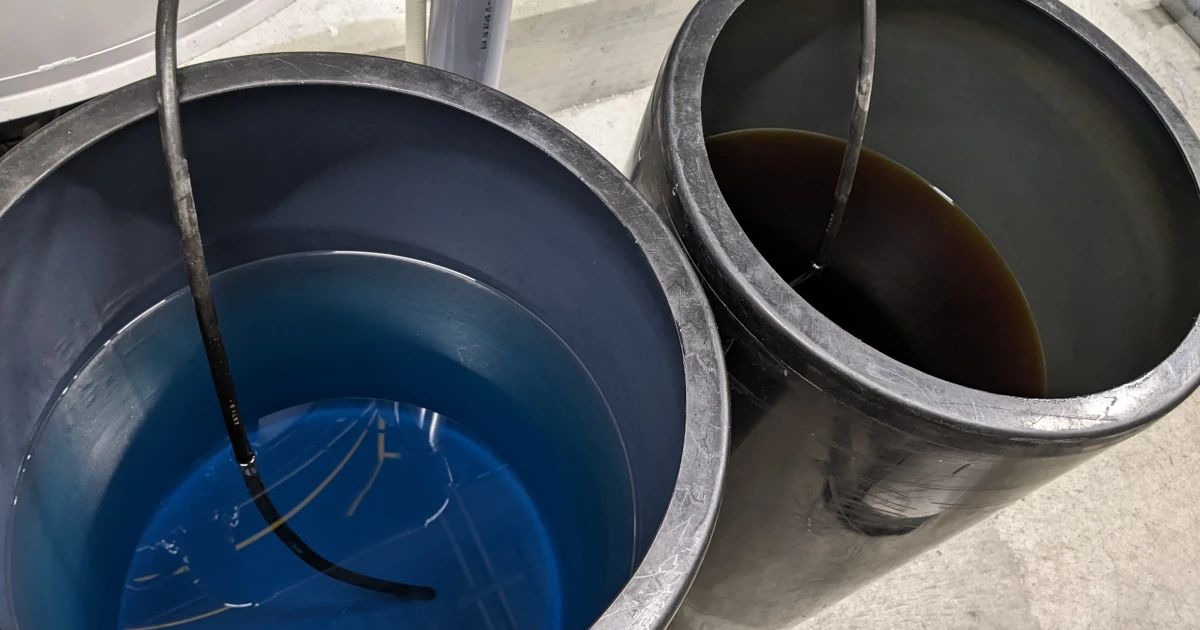
In fact, the very sense that separates “out the instant it stops” from “drifts slowly” is already the answer. The three split cleanly into two lines of watching.
First, flow rate is plainly the “out the instant it stops” type. So it does not pair well with the way of watching where you do a morning round and confirm it with your eyes. If it stops during a time when no one is standing in front of it, then until someone next goes to look, it keeps running out the whole time. So flow rate alone you let a machine catch, not human eyes. The instant the pump, or the flow, drops, it is detected and a notification fires to a person. This is a place to leave to the setup. And flow rate has more than just “is it zero or not” — it has a good band. Too thin and the film breaks and the root tips dry out; too fast and the roots do not settle. So along with “has it stopped,” you watch “is it roughly within this band.” I will not assert specific numbers, since those are for you to nail down on the floor, but it is good to hold the sense that there is badness on both sides — too thin and too fast.
That flow rate has a good band is clear in the numbers, too. In an experiment that varied flow rate with NFT lettuce, the most yield came around 1.0 L/min. Slower than this, at 0.5 L/min, water uptake and stomatal activity go sluggish, fresh weight drops by nearly 30 percent (about 28%), and nitrate in the leaves rises. Conversely, increase it up to 4.0 L/min and this time the roots are physically damaged and darkened, and uptake falls. (see 2) Another experiment with Swiss chard also showed a hump-shaped response: a moderate flow rate is a good stimulus for the roots, but in excess the roots shrink and growth falls. (see 3) It is neither “keep it flowing and you are safe” nor “the more the better”; only when you hold it in the band that is neither too fast nor too slow does its real character come out.
Nutrient solution temperature and dissolved oxygen, on the other hand, are the “drift slowly” type. They only drift a little during the hours when the HVAC’s effect is weak, so you can catch them with daily eyeballing and recording. On your morning round, look at nutrient solution temperature and dissolved oxygen and jot down that day’s values. Line them up against the previous day, and the day before that, and the slow drift comes into view as a line. And these two are not separate but linked: when nutrient solution temperature rises, the oxygen that can stay dissolved in that water decreases. So if the nutrient solution temperature is rising and you are not watching dissolved oxygen, before you know it the roots weaken from oxygen starvation. DFT especially, with its large water volume, loses oxygen near the bottom easily. This is less a weakness of the method than a property of water, so from the operations side you plug it with aeration — sending air into the water. You hold the dissolved oxygen band from both sides: nutrient solution temperature on one side, aeration on the other.
Adding dissolved oxygen on the operations side has support behind it, too. Putting air into deeply pooled water with fine bubbles (microbubbles) holds dissolved oxygen higher than ordinary aeration, and growth of leafy greens improved the same way for both komatsuna and spinach — so reports the same research group. (see 4, 5) But this, too, is not “the more you put in the better.” There is a hump to the strength of aeration: past a certain point it plateaus, and too strong actually drops growth. Just like flow rate, there is a right-amount band here as well.
So the daily routine becomes two-track. Flow rate, which stops suddenly, the machine catches and notifies on at once. Water temperature and dissolved oxygen, which drift slowly, a person eyeballs and records on the morning round. Automatic detection plays the “do not miss a sudden stop” role, and human eyeballing plays the “notice a mild anomaly before it is too late to fix” role. With only one of the two, gaps appear. Machine alone, and you miss “not stopped, but slowly going bad.” Person alone, and you do not make it in time for what stopped suddenly during the unattended hours. Run both wheels together, and only then does the chosen method’s underlying strength come out.
Outside the two-way choice, and drawing the reversible/irreversible line
NFT and DFT are not the only options. DWC (deep-water culture) is a method that submerges the roots fully in deep water, and in the sense of pooling water it is almost a relative of DFT. You can treat it under the standing-water heading, and nearly everything said about DFT so far applies as is. Aeroponics is a method that sprays a mist onto the roots, and in terms of dissolved oxygen it is the best off. The roots are exposed to air, so oxygen is most abundant. But flip that over, and since it pools no water, when it stops it dries out fastest. I said of NFT that “when the flow stops the film breaks and the tips dry out”; with aeroponics that speed stands out even more. So this is for limited cases — floors that can build out instant-stop detection and stop-countermeasures quite heavily. If you can build that, it is strong, but treating it as an extension of the present two-way choice is enough, and not something to agonize over in a separate slot.
The line between what you can plug and what you cannot fully plug, you draw at “reversible or irreversible.” Like the dissolved oxygen and flow-rate bands of DFT, where if it drifts you notice and bring it back and it returns to the band, the roots recover — these reversible ones are on the side you plug by operations. Watch every day, and when it strays put a hand in and pull it back. This is the work of people and records. On the other hand, in NFT when the flow stops and the root tips dry out, that drying does not come back. A tip once damaged does not return to how it was even if you bring the water back. This cannot be fully plugged by operational eyeballing alone. So detection and notification, then emergency power and a backup pump — on the side of equipment and setup, you crush the stopping itself ahead of time. The line comes out like this. Take the reversible ones on the operations side. The irreversible ones, do not load onto operations; kill them ahead of time with equipment and siting. The slow reversible ones, a person watches; the suddenly-arriving irreversible ones, you stop with machines and preparation.
But let me just add one point: reversible or irreversible is not a label glued to the method. Even flow rate, raise it too high and the roots are irreversibly damaged; and even with DFT, leave high summer nutrient solution temperatures or stagnation untended and the ample water turns this time into warm water that will not cool, and the roots rot — the strength of having water volume flips over when left untended. So you cannot declare “DFT is safe because it has water volume.” What moves the boundary is not an attribute of the method but “the width of the drift, and how long it was left untended.” What DFT buys you is “the grace until you notice and act,” not insurance that you need not watch.
The reach of this talk, and the one thing to take home
Last, let me set down one boundary. Everything up to here was on the premise of leafy greens in a PFAL closed room, run on clean water. Move to fruiting vegetables or deep-rooting crops, large scale, or a profitability comparison against a greenhouse that takes in sunlight, and even on the same axes the weighting should shift. Read those as a projection — “apply this view and it should come out like this.” And then, how you nail down the nutrient solution itself after choosing — how to set EC and pH, how to hold down disease — is, separate from the choice of method, a topic that deserves its own standalone piece.
On top of that, if I sum up everything to here in a word, it comes out like this. However many days you face the question “NFT or DFT,” yield is not decided there. The method is only the sort of thing that falls out naturally from your scale and the constraints in front of you; there is no answer that one is absolutely superior, and no single condition that decides it. What matters is watching the flow rate, nutrient solution temperature, and dissolved oxygen every day after you choose, and a way to notice when it stops. So if I say it in a word: the time you are agonizing over the choice of method, I want you to put into running it after you choose. That is all there is to it.