Work and Industry
Plant Factory Site Management: Read Plants, Data, Then Plan
“In the end, you just have to learn it through experience.” That’s the conclusion newcomers to vertical farm operations management tend to land on. And half of it is right. But this saying usually comes bundled with an assumption that what you have to learn is a single lump. In reality, farm operations management breaks down into three layers of different character. Reading the physiology of the seedlings, watching the numbers, and getting people and workflow in order. The three are picked up separately, and only when they mesh together does the site run. Where this way of seeing pays off is that, of the three layers, the part about mechanisms and how to read them can be handed to you as knowledge before you ever set foot on site. The only thing experience has to fill in is the last bit of tuning to your own numbers. From here you can draw a line that is neither “everything by trial and error” nor “everything from the textbook.”
Reading the seedlings and watching the numbers are different abilities
People newly on site usually get stuck in the same place. “So, in the end, what am I supposed to learn first?” The phrase “vertical farm operations management” gives you nothing to grab onto the moment you try to break it down and say what’s inside. Is it about cultivation, about watching numbers, or about moving people? Even if you try to draw out the whole picture of the manager’s job that farm operations management is, at first you can’t see where to put your hands.
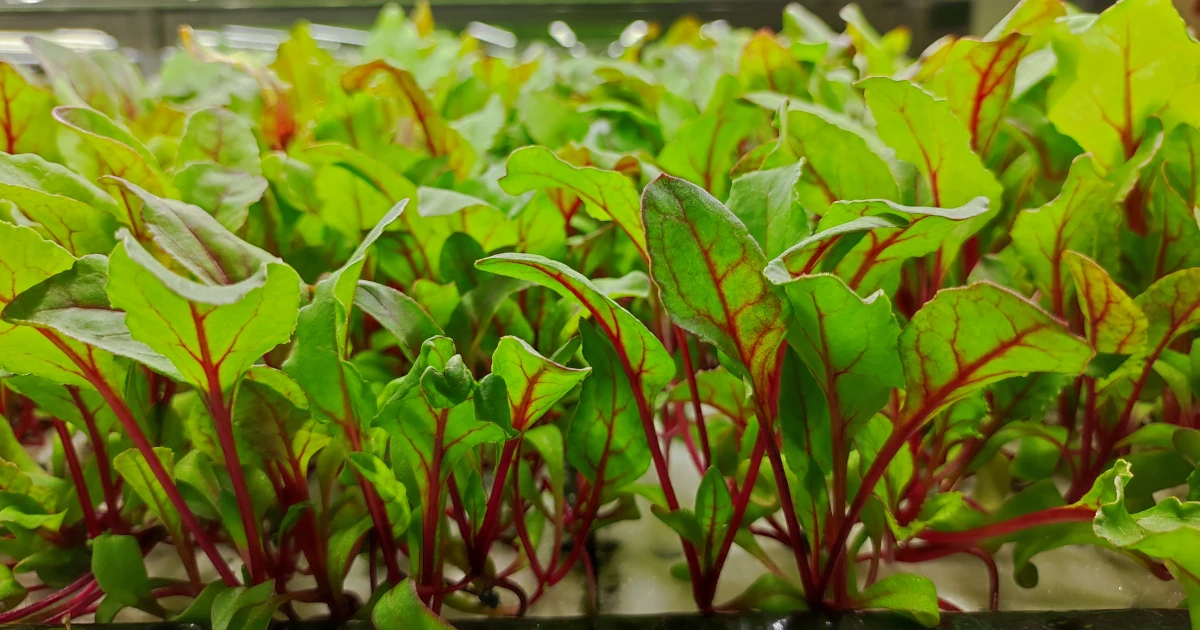
Spend time on the floor and you start to notice things like this. Among newcomers, there’s the one who looks at a seedling and right away senses, “this one’s a little weak.” But that same person has no reaction at all to changes in EC (a rough gauge of how concentrated the nutrient solution is) or other nutrient solution numbers. The reverse exists too—someone who can follow the numbers meticulously yet feels nothing when looking at the actual plant. At first you think it’s a difference in experience, but it doesn’t seem to fall on a single line.
How seedlings look and how numbers look are different abilities. Looking at a seedling and noticing “it’s weak” is the layer of plant physiology. It’s a world you learn in your hands and eyes—the firmness and color of the leaves, the way the center pushes up. Following EC and nutrient solution numbers, on the other hand, is the layer of watching numbers. It’s a different way of thinking—you read not the plant in front of you but the trend over time. The person who reacts to the plant in an instant will skim right past the table of numbers. It’s a pairing I’ve watched play out again and again on site. The reverse happens too. It isn’t that they can’t do both because their experience is shallow; it’s that the layers are different, so they’re picked up separately.
And here’s the tricky part: the better someone is at reading the plant, the more they tend to say, “I don’t need the numbers—I can tell from the leaves.” The way I see it, the urge to say that is understandable, but there’s a pitfall here. There are abnormalities the numbers tell you about first, and conversely there are abnormalities (like tipburn) that show up on the leaves first even when every number is normal. So neither one alone keeps the site running. Only by watching both do you reduce what slips through.
Looking at the research, it clicks into place. Tipburn—the symptom where the leaf margins die back—is triggered less by a shortage of calcium than by the fact that, when growth suddenly speeds up, calcium distribution can’t keep up to the young inner leaves. When high temperature or strong light is layered on top, it shows up more easily. (See 1, 2) The reason it appears on the leaves first even when the number for calcium in the nutrient solution is normal is precisely this mechanism. The physiology layer holds up as a line of reasoning, not a hunch. On the other hand, while making the light stronger raises yield, the efficiency of turning that light into growth actually drops. With the same physiology, there are shifts you only see once you follow them in the numbers. (See 1, 2) What an eye for leaves misses, the numbers layer catches. There are reports, too, that if you only look at the nutrient solution as a single figure called EC, you’ll miss it when one ion inside is quietly draining away or piling up. (See 3, 4)
The third layer: getting people and workflow in order
There’s one more layer, separate from physiology and numbers. The workflow of people—the sense for running who does what and when. There are people who understand the seedlings and can follow the numbers, yet are oddly bad at giving instructions to people or putting procedures together. Conversely, there are people whose cultivation is so-so but whose workflow is outstanding. On the sites I’ve seen, neither one is rare.
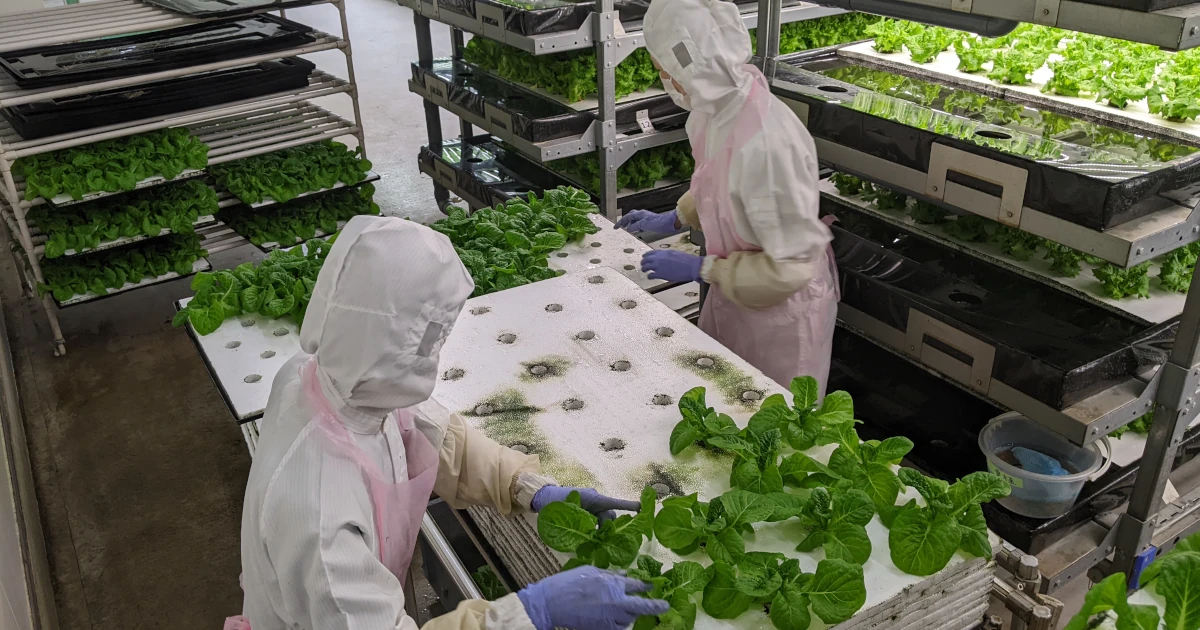
Workflow, too, is its own thing. With physiology and numbers, you’re dealing with the plant; with workflow, you’re dealing with the flow of people and things, and it calls for a different kind of thinking. What matters, though, is that workflow looks like pure instinct but is in fact something you can measure and put in order. When I wrote out a day’s work at my own site, it was the area around harvest that was eating up the time. Who goes in when and on what task, how high to set the bench, where to put the cut produce—all of that you can see and measure. Change the bench height or how far the hands have to reach, and even for the same worker, the strain on the body and the points where the hands stall will shift. Rather than writing it off with “that person is good at workflow,” you can actually watch where people are waiting and where postures are being forced, and reorganize the layout. So the fact that someone can be bad at cultivation yet outstanding at workflow is, the way I see it, only natural—this is a layer separate from physiology and numbers, one you measure and put in order.
That’s all three on the table now: the layer of reading plant physiology, the layer of watching the numbers, and the layer of getting people and workflow in order. Farm operations management runs with these three overlapping and working together.
The boundary between the layer you can hand off as knowledge and the layer you build through experience
Once the three layers come into view, the newcomer’s “in the end, what do I learn first?” suddenly becomes concrete. Rather than picking up all three at once, each layer has a different entry point.

Of course, these three layers aren’t all there is to farm operations management. Hygiene, post-harvest quality, and profitability as a business sit outside the three layers. The three layers are an organizing spine I set up as the trunk a newcomer reaches for first; they aren’t meant to cover everything here.
So, of these three layers, how far can be handed off in advance as “knowledge” you get from books and papers, and from where does it only sink in once you’re on site? Waving it all away with “you learn it through experience” isn’t right, but you can’t turn all of it into a manual either.
In all three layers, the entry point mixes “what can be handed off in advance as papers and knowledge” with “what can only be built at your own site.” In terms of sequence, the mechanisms come first—you get those into someone’s head before anything else. For the physiology layer, how the plant takes up light and nutrients and how leaves form—that line of reasoning you can read in a book. For the numbers layer too, what EC, pH, and PPFD represent and what to suspect when they move a certain way—that way of reading itself can be handed off in advance. For the workflow layer too, the idea of writing out the work and measuring it can be taught. Up to here is shared as an entry point, the part you can hand over before setting foot on site.
But the boundary between the side you can hand off and the side you build up is fairly clear. For instance, that raising PPFD (the amount of light) increases yield—that mechanism can be explained. But the point where it pays to stop depends on your own power costs and selling price, and that can’t be handed to you as a number. (See 1, 2) The optimal EC value, too, shifts when the crop or system differs, so you can’t just use someone else’s value as is. (See 5, 6) The light recipe—the ratio of red to blue and the amount of light—also has its optimum shift depending on what you’re aiming for. You can’t maximize multiple aims at once. (See 7, 8) So you hand off “the mechanisms and how to read them” as knowledge, and “what to set those values at for your own conditions” is something you build up by reading them against your own yield and gross margin. That’s the line to think along.
The layer it’s your turn to grow reveals itself where you’re stuck
Once you can draw the line between knowledge and experience, the next thing is where you yourself stand. You can read the plant and the numbers well enough, but you’re shaky on workflow—and at that point the questions start: should you go shore up the layer you’re weak at, sharpen the layer you’re strong at further, and can the site run on one layer alone being outstanding?
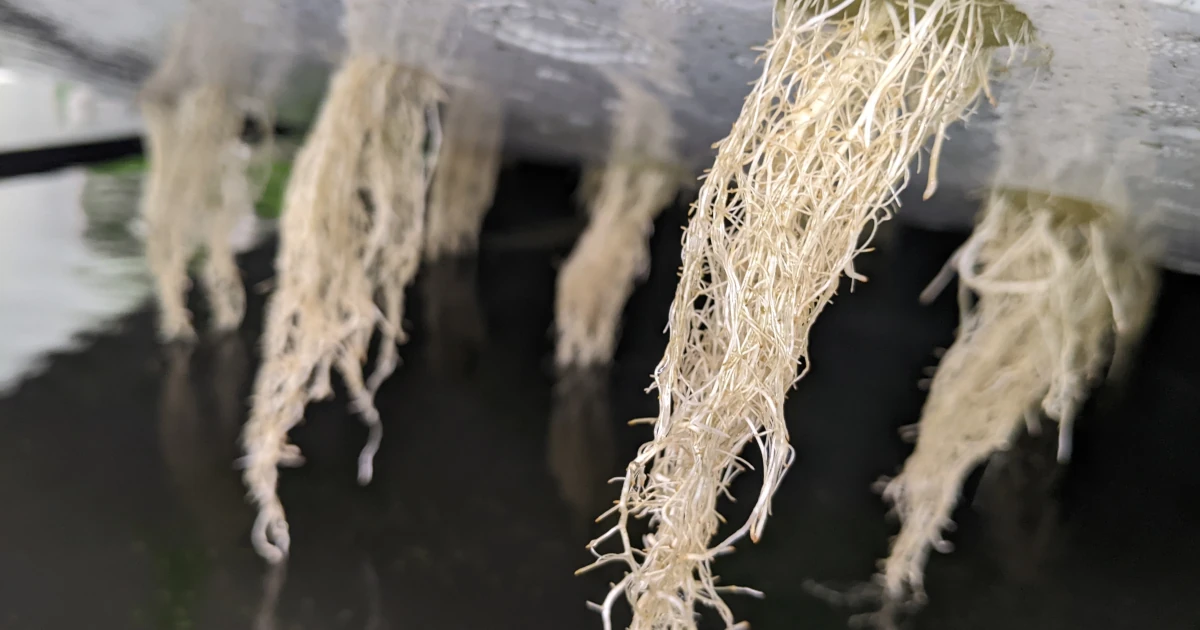
Start with how to size it up. You don’t decide it by what you’re good or bad at. Where you’re actually stuck on site right now—that is, where delays and rework are occurring—which layer does it sit on? Working backward from there is the on-site way of seeing it. But where you’re stuck usually straddles several layers. You don’t need to separate them perfectly. Pick out one delay or rework that’s most visible, and choose by which layer’s entry point it’s closest to—that’s enough. If you can already read both the plant and the numbers, the thing that jams up is usually the workflow—and that’s the layer it’s now your turn to grow.
Whether to shore up your weak point or sharpen your strength—this changes with your position. If you’re running the site on your own, you have to fill in the layer you’re weak at, or it grinds to a halt. If it’s already running and you’re in a position to raise quality a notch, sharpening your strength works better. Neither one is the right answer—it depends on where you stand.
Can’t one outstanding layer carry the site on its own? No—it can’t. Because the three layers are picked up separately, on site they only pay off once they mesh together. You can read physiology perfectly, but the yield won’t hold unless the number-watching and the workflow are in place too. Optimizing just one layer doesn’t necessarily make the whole optimal—that’s how I see it. The same structure shows up among environmental factors, too. In one multi-factor experiment, the nutrient solution’s EC was the single factor that affected growth and nutrition the most. Even so, getting EC alone right isn’t enough; it’s shown that the combination with light and other conditions is what comes into play. (See 9) Even when there’s a ranking to the effects, optimizing only the single most effective factor still misses things. Pull back further, to the business as a whole: the reason vertical farms can technically hit high yields yet stall when it comes to adoption is that the mix of conditions—energy cost, upfront investment, regulation—becomes the bottleneck, and you can’t make the case for viability on the technology alone. (See 10, 11) That sense—that things only run once the layers mesh—holds in the same shape right up through the makeup of running costs, even as you change scale.
Pick one layer that’s your turn and go deep
Work backward from where you’re stuck to find the layer that’s your turn, and know that things run only once the three layers mesh—once that’s clear, all that’s left is to start moving.
With the three layers in mind, you don’t need to read everything in order. From the layer you’re stuck on now, the layer that’s your turn, pick one or two and deepen them by trying things on site—that’s enough.
If you’ve come to the turn for watching numbers, there are several entry points. For things around the nutrient solution, how to read EC and pH. For temperature, reading it not by room temperature itself but by the difference between leaf temperature and air temperature. For humidity, reading temperature and humidity together not as merely high or low but along the single continuous axis of VPD (vapor pressure deficit). For light, evaluating the PPFD of the LEDs not by brightness itself but by how much it turns into revenue per unit area. Just start from whichever one is on your mind at your own site right now—that’s enough. Reach for all of them at once and none of it sticks. If it’s the turn for workflow, how to design the harvest work and how to use the records taken on site for decisions—that area becomes the entry point. It’s outside the three layers, but hygiene can’t be dropped as the floor of quality, so keep it in the back of your mind too.
One thing to add. Depending on your aim, you change the settings themselves. The conditions that maximize yield and the conditions that concentrate functional nutrients are not the same; depending on whether you take yield or quality, it’s been reported that you need to switch how you set light and root-zone temperature. (See 12) So “which one to dig into” also changes with which one your own site is aiming for right now.
As for how to hand it off, rather than “read all of these in order,” it’s “read the one for where you’re jammed up right now, and tomorrow try it once on site.” This way of going about it, in the end, sticks the best.
Let me add one honest note at the close. Even though the mechanisms and how to read them can be handed off ahead of time, what to set your own numbers at and how to mesh one layer with another still take time—time you put in by standing on site. On that point, “you can only learn it through experience” is right. But that’s different from “so it’s all instinct.” How you hold on to this part—the part that can only be built on site—within the organization opens onto a separate question: how to turn tacit knowledge into an asset. How far you can hand off in advance, and where your own turn begins—just being able to draw that line changes how you stand on site—a great deal.