Farm Operations Management
Plant Factory LED and PPFD: Stop Before Power Beats Yield Gain
Articles for Farm Operations Managers
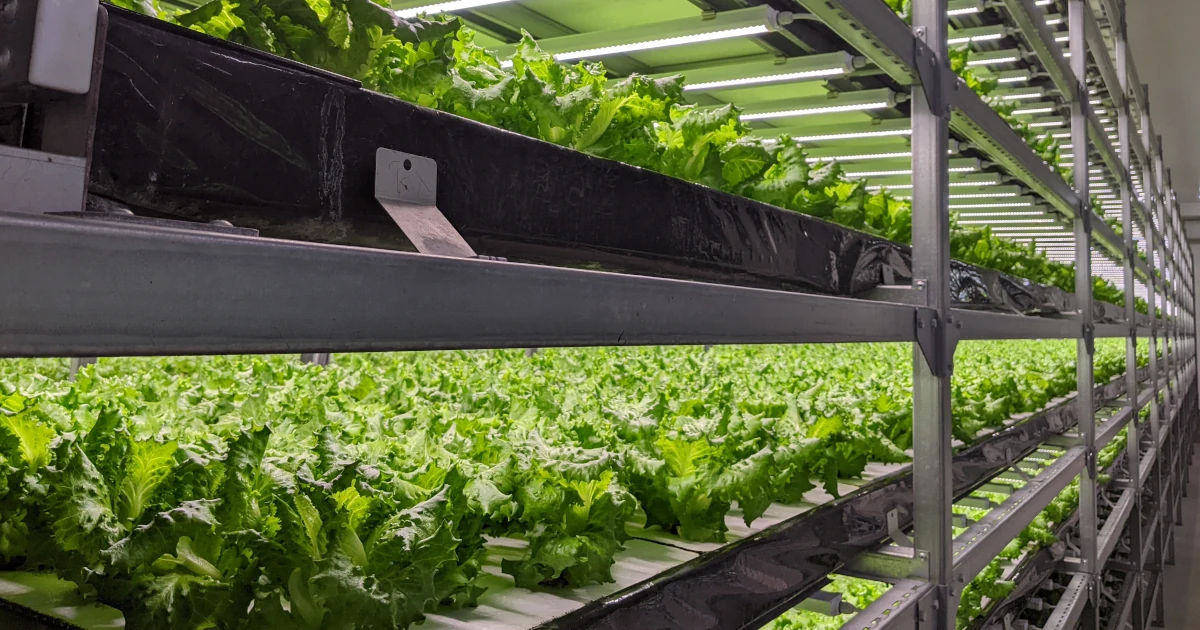
“So how much should I actually give my lettuce?” Questions about PPFD almost always get framed this way. But the very assumption that there is one right number is worth re-examining. The brighter you push the light, the more quietly the share of electricity that turns into vegetable weight falls off. So “how much to give” is decided not by the crop’s needs but by the power price at the time. The optimal PPFD sits on the side of the electricity bill, not on the side of the crop.
Why “higher PPFD is always better” flips on you at month-end
Sometime last year, did you take the plunge and crank one tier of your rack up brighter? On lettuce-centered hydroponics, you push the light you had been running at, say, a little over 200 (μmol/m2/s) up toward nearly 300, meaning to be aggressive. The harvest goes up. The weight and the look both improve. “Brighter really was the right call,” you think — right up until you see the power bill at month-end. And then: wait. You raised the light by 1.5 times, but yield did not go up by 1.5 times. Subtract the extra electricity from the extra sales, and what you actually keep is thinner than before. Some months go like that. In my own experience watching PFAL lettuce hydroponics, I have seen the same scene many times: you push hard and your margin gets thinner instead.
What makes it tricky is that it is not the same every month. When power is cheap, that aggressive setting looks plenty positive, but as the unit price climbs, the very same setting suddenly feels heavy. Same rack, same cultivar, same light, yet “this is right” and “this is overdoing it” swap places from month to month. That snag is where the whole point shows itself.
First, the relationship between light and yield is not proportional. Starting from a low level, it climbs fast at first, but the higher you go, the smaller the gain from another 100 of brightness becomes. With leafy greens, past a certain brightness the efficiency with which added light converts into yield starts to fall. So going from 200 to 300 gives you 1.5 times the light, but yield does not come anywhere near that. This is not a setting error; it is what that curve naturally does. In one controlled lettuce experiment, raising PPFD through 200, 400, and 750 dropped the fresh weight per mol of light from 29 to 27 to 21 g (see 1). Absolute yield keeps rising all the way to 750. But the efficiency with which the same 1 mol of light turns into vegetable falls the brighter you go.
The power bill, on the other hand, rises almost in a straight line with the light. Add 100 and roughly that whole amount gets added on. So the extra sales “keep slowing,” while the extra electricity “rises in a straight line.” Lay the two over each other and somewhere there is a point where “the extra sales from the next 100 watts” and “the electricity cost of the next 100 watts” exactly balance. That is the stopping point. Before it, adding is still worthwhile; past it, the more you add the thinner your margin gets.
Depending on conditions, past a certain band of brightness even yield itself stops climbing. In one lettuce-and-basil experiment, adding light grew the crop up to around 250 μmol, but beyond that the gains all but disappeared (see 2). Light past that band barely affects yield, yet the electricity cost lands in full. That said, the position where this plateau appears itself shifts back and forth depending on CO2 concentration and temperature. Give enough CO2 and the plateau pushes further out. So rather than memorizing the absolute “250,” the sensible thing is to watch where the plateau falls in your own facility. That the stopping point exists as a real number does not change.
And the core of it is this: that balance point slides sideways as the power price moves. In a month when power is expensive, the “next electricity cost” line gets steeper, so the balance point pulls nearer. That is why the 300 that used to be right suddenly looks like overdoing it. In a cheap month the line is gentle, so the same 300 clearly pays off. Nothing about the rack, the cultivar, or the light has changed, yet the verdict flips — because the thing you did not touch, the unit price, is the thing that moved. Try to memorize the optimal PPFD as a single number and you will be wrong in some month for sure. What to remember is not the number but the behavior: “when the price rises the stopping point moves nearer, when it falls it moves further out.”
That said, before moving on to that price discussion, there is one thing to check. When adding light stops moving yield, is the cause really on the light side? Added light may fail to work because CO2, airflow, or temperature has become the limiting factor first. If adding CO2 pushes the plateau further out, the thing to pull back is not the light but the CO2. If airflow is insufficient and gas exchange is jammed up around the leaves, put a breeze on it first. Only after you have confirmed that the limit is on the light side do you move on to pulling back or adding light by price. Get the order backwards and you end up cutting only the light while leaving the real cause in place.
When the price rises, how much light should you pull back?
If power goes up 10%, does dropping PPFD by 10% roughly balance it out? Or can you pull back less than that, or should you pull back more? You wish there were a single rule of thumb.
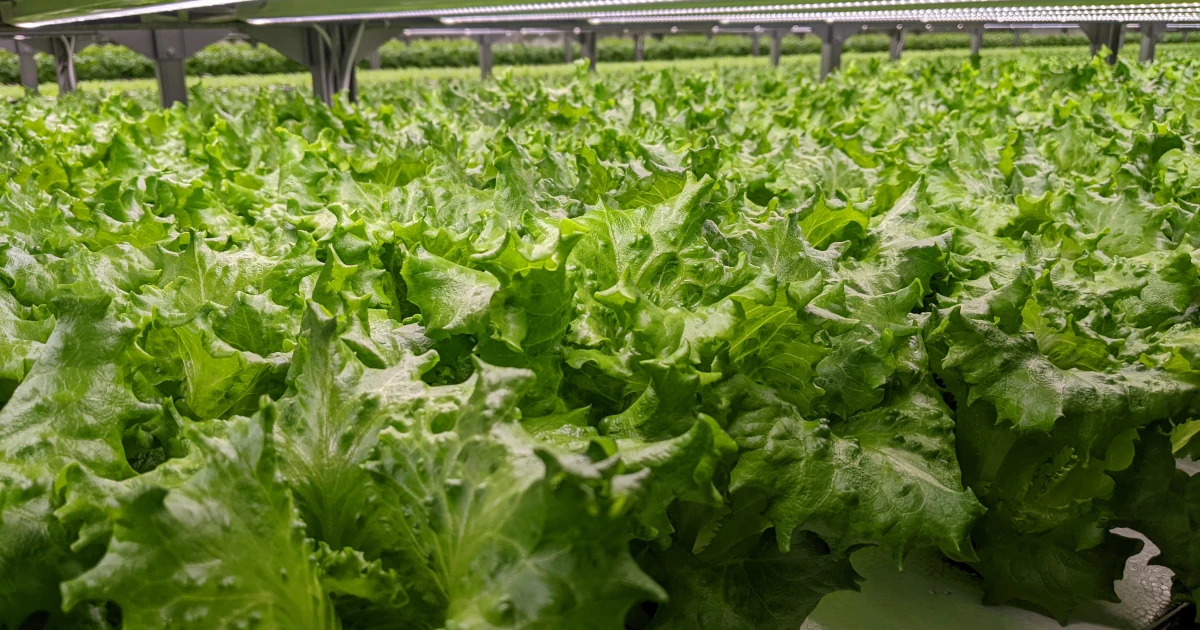
To put the conclusion first: that single rule of thumb cannot be made. Make one and memorize it and you will usually be wrong. The amount to pull back changes a great deal depending on where you currently sit. By “where” I mean: if you add one more step of light above your current brightness, does yield jump up or barely move at all — in other words, whereabouts you are on the previous section’s “curve that responds less the higher you go.”
Suppose you are currently running fairly aggressive, where adding light barely lifts yield — out where the curve has flattened. In this case even a small rise in the unit price moves the stopping point sharply nearer. Light out there produces “the electricity cost in full, but only a sliver of return.” It is the first light to be cut the moment the price gets heavy. If you are here, a 10% increase is fine to answer with a fairly large pullback.
What about the reverse, where you are still modest, on the rising part where adding light brings yield right along with it? Light in this zone works well step for step, so a 10% price rise barely moves the stopping point. Pull back in a panic and you throw away light that was working well. If you are here, better not to pull back much. For the same “10% increase,” the former pulls back a lot and the latter pulls back almost nothing. That is the size of the difference.
So before hunting for a percentage cheat sheet, there is one thing to do. Change the light by just one step in your own facility and measure once, properly, how much yield moves. Once you know that, you can see “am I on the flat side, or on the rising part.” How to move it then falls out naturally afterward.
Do not overthink the measuring. For one rack’s worth, raise (or lower) PPFD by a single step, and lay the extra revenue — the added yield times the selling price — next to the extra cost — the added power times the unit price. If the extra revenue comes in under the extra cost, that step went too far, so put it back. Run this once each time the price moves and your facility’s stopping point shows up as a per-area number for that month.
That said, let me add one thing honestly here. Whether the extra yield actually sells is a separate matter. If your contract fixes the price and the extra sells at a discount, or it falls out of spec and gets discarded, treat that extra revenue as zero. In a case where one leaf of tipburn drops the whole head out of spec, more yield never reaches your bottom line. Then the stopping point comes well nearer than the calculated point. Measure by “weight that grew and sold,” not “weight that grew.” Mix this up and you get that same mismatch again: it adds up on paper, yet the margin is thin.
And the unit price moves not only by month but within a single day. If nighttime power is cheap, deliver the same daily total light (DLI) weighted toward those cheap hours. Even at a site on an annual contract where the monthly price does not move, this is the most practical form of “let the price decide how you deliver” — usable every day regardless of contract. What you move here is the timing and distribution of the lighting, not the light-dark ratio itself (so it does not collide with the body-clock point coming up later, think of it as keeping the light-dark rhythm steady while weighting toward the cheap hours).
That this “redraw it to match the price” is not just theory also shows up in the reports. When daily light-intensity patterns were moved to track frequently shifting electricity prices, the lighting electricity cost was estimated to be cut by about 10% without dropping the market weight of basil, pak choi, arugula, and spinach, and the market weight was confirmed in an actual cultivation experiment not to drop (see 3). The reduction figure itself is a model estimate, while the no-drop-in-yield point was shown in a separate cultivation experiment — that is the combination. You can move the electricity cost to follow the price without sacrificing yield. The value of redrawing the stopping point rather than fixing it is shown from both the model estimate and the cultivation experiment.
Not just intensity: distribution is a second axis
So far we have thought along one axis — “what to set PPFD to,” the intensity of the light. But in practice there is also a choice of “distribution”: delivering the same daily total light strong and short, or weak and long. Once you bring in lighting hours, how you search for the stopping point changes too.
Even at the same daily total light (DLI), spreading it weak and long can grow the crop more than delivering it strong and short. In one lettuce-and-mizuna experiment, keeping the total light the same while extending the lighting hours and lowering PPFD raised the shoot growth by about 16% and 18.7% respectively (see 4). On the same electricity, yield moves depending on distribution. So it is worth thinking not only about “where to stop on intensity” but also “how to deliver that electricity.”
That said, weak-and-long is not a cure-all either. Stretch the lighting longer and you occupy the rack that much longer, so turnover falls. For a rack where you want to ship even a day sooner and pack in the next round, that is not to be sniffed at. Pushing growth hard can also bring on tipburn — the symptom where the leaf edges die back — and the yield you worked to add gets whittled down by ugly leaves. That can happen too.
So it is worth treating intensity (PPFD) and distribution (photoperiod) as separate levers. The stopping point, too, becomes something you search for within the combination of these two rather than a single point on one line. The things to watch increase as well: yield and electricity cost, plus tipburn and rack turnover — four. When you move the distribution, do not stop at watching yield alone and call it “up”; watch how all four moved as a set. Do that and you will gradually learn to tell when it is a moment to push with intensity and when it is a moment to earn with distribution.
Choose equipment by watts per unit of light, not brightness
So far this has been about day-to-day settings, but it connects to what you do about equipment. When a question comes up about replacing the LEDs or adding one more tier of racking, it is easy to think “if I’m replacing them anyway, a brighter model” or “if I’m adding, something that earns more light.” That way of choosing is dangerous. When you choose equipment, what should you look at instead of the absolute brightness? Can the day-to-day stopping point and the investment that runs into the millions be thought about with the same yardstick? Let me sort this out.
What to look at in choosing a model is not the absolute brightness. Look at “how many watts it eats to make the same 1 of light” — that is, power per unit of light, the efficacy. Even putting out the same PPFD, an efficient model can make it on less power. Then “the electricity cost of the next 100 watts” gets lighter, so the balance point — the stopping point — shifts further out. You could just as well say: more harvest on the same electricity. So the sensible thing is to line up models by “watts per unit of light,” not by “brightness.”
That said, let me attach an honest caveat here. There is a point made that LED efficacy values measured in the lab do not necessarily become the same numbers on site (see 5, 6). Assuming “switch to an efficient model and it’s solved” in the same tone as “switch to a brighter model and it’s solved” is, again, dangerous. As we will see by cost line later, the effect, averaged across the whole cost, does not come out as large as you think, and rarely makes a difference big enough to flip things. Best to keep your expectations around that level.
On top of that, are the investment yardstick and the day-to-day stopping point separate things? They are on the same continuum. If the day-to-day judgment is watching “can the light pay back the electricity cost of the next 100 watts with the yield it produces,” the investment judgment just watches “in how many years can the yield increase it produces pay back the price difference of this equipment.” The cross of the judgment is simple: the nearer your current setting is to the plateau, the thinner the upside of investing in more light; and the higher the electricity price, the greater the appeal of switching to an efficient model. It is the same yardstick of “yield per unit of light x power price,” simply stretched along the time axis from the monthly books to a payback period of several years. There is no need to think with a different head. In cost-line terms, in a PFAL power makes up roughly 20-40% of production cost, and lighting uses roughly 60-80%-plus of that power (see 3). So the effect of cutting power by 10%, averaged across the whole cost, is unexpectedly thin. Frame it as “in how many years do I recover that thin difference after spending millions,” and the picture turns sobering.
And one more thing: the matter of order. Before replacing equipment, the first move is to inspect whether there is still room left to squeeze from the hardware you already have. The intensity stopping point and the distribution can be moved without spending money. Take everything operations can take, then buy hardware for whatever is still short after that. The headline example of “take it through operations” is reflectors. Put reflectors on the sides and ends of the cultivation rack to pick up escaping light again, and it is known in the field that you can lift yield by roughly 10% (about 10-15% with high-reflectance aluminum board) on the same LED power draw, with almost no new investment. You are not increasing the light or switching the model — just reducing the spillage of the electricity you are already running. It is the clearest of the operational gains to grab before you replace equipment. Jumping at a brighter model, and jumping at an efficient model, both come, in order, after you have squeezed operations like this.
The order in which to tighten light unevenness and wavelength
The discussion so far has run on the assumption that light falls evenly across the whole rack. But on a real rack, the brightness differs quite a lot between the edges and the middle. On top of that there is a separate question of what to do about the color of the light — white, or red-and-blue. Once you start worrying about this “unevenness” and “wavelength” it can seem to go on forever, so let me sort out the priorities of how far to tighten.
These two are quite different in character, so thinking about them separately makes the priorities clear.
First, light unevenness. This is worth tightening early. The “stopping point” up to now was decided on the rack’s average PPFD. But when the edges and the center differ in brightness, it easily happens that part of the rack has entered the zone where it can no longer use up the light and is throwing electricity away, while another part is short of light and not producing yield. On the same electricity, you get waste on one side and spillage on the other at the same time. This is why, before searching for the optimum on the average value, it is worth measuring once “how much it varies.” That said, better not to try to draw the tolerance line at a universal number like “up to what percent difference between edge and center.” What to draw is “whether that difference actually surfaces as a difference in yield or quality.” If you measure and there is a difference but it does not surface in harvest volume or appearance, there is no need to chase it yet. If the difference does surface, the procedure is to even it out with the fixture’s light distribution, the mounting height, and how you place the reflectors. In my own experience, measuring edge versus center on a PFAL lettuce rack showed a difference, and evening it out with reflectors and placement raised the consistency of the shipment. As a rough guide, it is said that a grid layout can even the variation to within 5%. But whether to tighten that far is decided not mechanically by a percentage line but by whether that difference actually surfaces in yield and quality. It is strictly a guide to how far you can even things out, not a quota to be met.
Wavelength — the red-blue ratio, or white — is a slightly different animal. The most important thing here is that there is no single right answer of “red to blue in what ratio” that maximizes yield. The optimum moves with the crop, the cultivar, and what you are aiming for. The color of the light also affects form: roughly speaking, strengthen blue and the leaves grow thick and tight, strengthen red and the stems tend to stretch — a difference in direction like that. Beyond that, it is reported that even within the same crop, the ratio that maximizes yield and the ratio that maximizes a functional nutrient have been confirmed to point in opposite directions (see 8. A separate trial varying the blue-to-red proportion in leafy greens also showed that growth and how nutrients are taken up change with the ratio: 7). So wavelength is something you match after first deciding “what do I want to harvest.” Borrow a ratio that worked at another facility as-is and it may not fit.
So the priority comes out like this. First the intensity stopping point — the power price and the yield curve. Next the distribution (photoperiod) and the light unevenness, which is the work of erasing spillage. Wavelength can come last, after “what to maximize” is decided. It looks like it goes on forever because you try to tighten everything at once. Knock them down one at a time in the order that they bear on revenue, and the end does come into view.
Stop memorizing the optimal PPFD as a single number
Let me put in one caveat here. Everything so far has assumed a site running leafy greens like lettuce in a PFAL. “The yield curve flattens” and “the stopping point moves with the power price” are statements within that assumption. With fruiting crops like tomatoes or strawberries, or a sunlit greenhouse, both the economics and the way light works become a different beast entirely. Applying the thinking here as-is to a different type or crop is the dangerous part.
On that basis, if there is just one thing to take away at the end, it is “stop memorizing the optimal PPFD as a single number.” Across everything we have discussed, what mattered most was not the settings themselves but how you look at the settings. An LED is not something you set to a number once and leave pinned in place. It is something whose stopping point you redraw every time the power price moves. The three hundred that was “right” today becomes “overdoing it” on next month’s books. That is not a failure; it just means redrawing the line by however much the outside price moved.
What to take away is not a new number but the way of seeing. What you thought of as a fixed value, you treat as something that moves, redrawn each month to match the price. Switch that one thing over and the rest is just knocking down today’s order — intensity, then distribution and unevenness, and wavelength last — one at a time. Go along with it matter-of-factly, as that kind of design variable you keep re-tuning. That alone should make things a great deal easier.
A vertical farm’s revenue turns more on one field-level way of seeing like this than on the most advanced system. As something that takes the same thinking and lays it out across each cost line, do reach for 172 hints to raise a vertical farm’s profitability if it helps.